The Crisis in Brief:
65,000+ people detained since January 2025
5,000+ held at Fort Bliss in El Paso alone
73.6% of ICE detainees have no criminal conviction
5x more likely to win their case — with a lawyer
A System Designed to Overwhelm
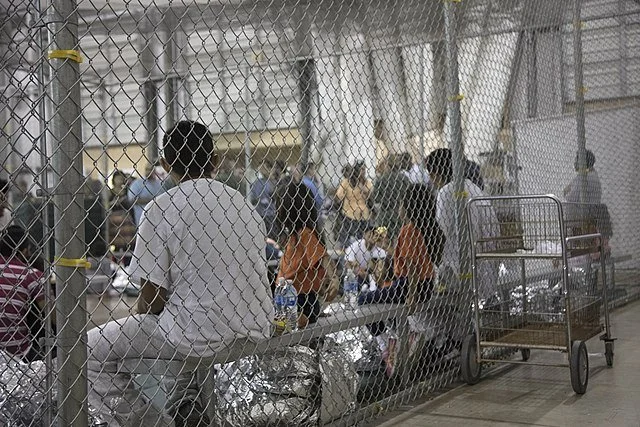
Since January 2025, over 65,000 people have been detained under the federal administration's deportation campaign. At Fort Bliss in El Paso, more than 5,000 individuals are held — many transferred hundreds of miles from their homes and families, in conditions that have already resulted in three deaths.
Many of those detained have current legal status or pending applications for relief. Nearly three in four have no criminal conviction. And most have no lawyer.
The consequences are severe. Legal representation makes immigrants five times more likely to win their cases. Without an attorney, people miss filing deadlines, fail to present asylum claims properly, and are deported despite having legal grounds to remain. For someone who may face deportation in days, a single conversation with an attorney can change everything.
This isn't only an immigrants' rights crisis. Due process belongs to everyone — and when it's stripped from one group, it becomes vulnerable for all of us. The legal community has the power to respond. Detention Bridge is how.
About Lawyers for Good Government

Lawyers for Good Government (L4GG) is a nonpartisan 501(c)3 with a nationwide network of over 125,000 pro bono attorneys. We recruit, train, and deploy them — in person and remotely — to fight for the rights of all who suffer in the absence of good government.

Since 2018, our immigration program, Project Corazon, has provided direct legal assistance to thousands of detained individuals across Texas, Arizona, Georgia, Louisiana, New Jersey, Indiana, and Massachusetts — including serving more than 1,500 individuals at Karnes Detention Center in partnership with RAICES.
We know how to do this work at scale. Detention Bridge is the next step.
What Detention Bridge Does
Detention Bridge is a rapid-response program that mobilizes pro bono attorneys to detention centers nationwide. L4GG's in-house immigration law experts designed this program specifically to harness the commitment of attorneys without prior immigration experience — dramatically expanding the pool of people who can help.
Every volunteer is matched to tasks based on their availability and training level. Every task addresses a direct, urgent need.
What Our VOLUNTEER Attorneys Do
Conduct Intakes for Local Partners: Establishes each individual's legal situation, identifies urgent deadlines or risks, and determines what kind of help they need most.
Deliver Know Your Rights Presentations: Ensures individuals understand their legal rights, filing deadlines, and available relief options — often their first contact with legal information.
Document Facility Conditions: Creates crucial documentation for individual cases and builds the evidentiary record for large-scale litigation challenging detention policies.
Draft Declarations & Prepare Complaints: Holds the government accountable for rights violations and creates an official record that can support legal challenges.
File Habeas Petitions: Directly challenges unlawful detention in court — the most powerful tool available when someone is being held without legal justification.
Prepare Immigration Filings: Responds to the ever-changing legal needs of detained individuals as their cases evolve.
When cases reveal grounds for deeper legal challenge, L4GG's Pro Bono Litigation Corps — powered by retired federal litigators and experienced solo practitioners — stands ready to take on impact litigation and constitutional challenges that can create systemic change beyond any individual case.
Where We Are — and Where We're Going
Detention Bridge is currently active at Fort Bliss in El Paso, Texas, in partnership with local organization Estrella del Paso.
Fort Bliss was chosen deliberately: it is one of the primary hubs where individuals from across the country are being sent — often hundreds of miles from their homes, their families, and any attorney who knows their case. The need here is acute and growing.
Large-scale attorney training begins in March 2026. The program is designed to replicate quickly at additional detention centers as funding allows, building on existing local infrastructure rather than duplicating it.