Written by Jillian Blanchard, L4GG’s Senior Vice President, Climate Change and Environmental Justice
I still remember talking with Benton Harbor community residents about how their families were forced to buy their daily drinking and cooking water from the local grocery stores because the water in their community was unsafe to drink. But the crisis wasn’t just the lead pipes - it was the indifference. Removing the lead pipes in their community wasn’t a high enough priority for decision makers at city hall, the state legislature, or Congress.
This isn’t an outlier.
Whether it is the legacy of redlining that funnels pollution into specific ZIP codes or a waste facility placed exactly where a lifesaving community resource center should be, these outcomes are the historical footprints of exclusion and neglect. In America, proximity to harm and exposure to toxic pollution has never been a coincidence of geography; it is a design choice made by those who view frontline communities as disposable.
So, when I sat down to write this Earth Day message, I wanted it to be honest. And the honest truth is this: justice is not a preference. It is an enforceable right - one that many communities have yet to be granted.
A Promise Written Into Law
In 2022, Congress passed the Inflation Reduction Act, which included a federally mandated investment in the communities bearing the heaviest pollution burdens. Under Clean Air Act Section 138, lawmakers appropriated $3 billion as a direct congressional mandate to the Environmental Protection Agency (EPA) to fund community-driven critical public health projects that had long been ignored.
The Community Change Grants and Environmental and Climate Justice Block Grants flowed from that mandate. These funds were awarded to tribal nations, rural counties, cities, and communities where residents had been asking for basic environmental protections for generations. These grants did not unlawfully prioritize one community over another, they were based on real, actionable science, sending money for the first time to the places that had the lowest air and water quality and had long been neglected. Critical grants were made to fund stormwater drainage studies and repair, air quality monitors in communities with high asthma rates in children, emergency shelters in hurricane zones, clean energy resilience upgrades, and lead service line replacement, etc. According to a 2024 economic study by Allstate, the U.S. Chamber of Commerce, and the U.S. Chamber of Commerce Foundation, every $1 invested on climate resilience and preparedness saves communities $13 in damages, cleanup costs, and economic impact. That’s a big return on human investment. These weren’t wasteful programs; they were overdue ones.
What Happened and Why It Was Unlawful
In early 2025, the EPA did the unthinkable. In a single day, a Trump political appointee recommended terminating the entire portfolio of environmental justice grants. The stated reason? Environmental justice was no longer an agency “priority.” Hundreds of organizations received boilerplate termination letters, funds were frozen without warning, staff were laid off, and programs that were years in the making, were shuttered overnight.
This wasn’t a budget shortfall. This was an administration declaring that the communities Congress specifically funded EPA to protect were no longer worth protecting.
“When the government signs a grant agreement, it creates a binding obligation. When it breaks the agreement without cause, it violates the law. And if an administration can unilaterally withhold billions in funding that Congress explicitly mandated for critical health projects, the rule of law and the Constitution become mere suggestions - and every community’s safety becomes contingent on who holds the pen. That’s not how the rule of law works.”
What We’re Doing About It
At Lawyers for Good Government, we aren’t just documenting this crisis; we are arming grantees with legal support and litigating it in court.
Through our Federal Fund Protection Initiative, we have mobilized a large-scale legal infrastructure in coordination with our partners at the Environmental Protection Network, providing bi-weekly updates, resources, and legal and technical assistance to grantees with unlawfully terminated grants. Our pro bono Court of Federal Claims Clinic provides direct representations to affected organizations - because our work here is about more than just recovering funds. It’s about holding the line, protecting communities, and protecting the rule of law. It’s about whether Congress’s spending authority means anything at all.
What This Looks Like In Communities
For the past year, we’ve provided legal support and advocacy on behalf of over 600+ environmental justice grant recipients across the nation. The impact of these unlawful acts isn’t abstract. It has names and ZIP codes.
In Houston, Air Alliance was prepared to launch a pollution-permit notification system that would have warned Gulf Coast residents before industrial emissions reached their lungs. The grant was unlawfully terminated without warning.
In Richmond, California, an area that is home to the Chevron refinery and well known for its battle fighting for clean air, a $19 million grant that would have funded a resilience center, planted trees, restored Wildcat Creek, and electrified 40 local homes, was canceled.
In areas like Hartford and Bridgeport in Connecticut, where storms are getting stronger and floods recur, communities are asking hard questions about fossil fuels driving the damage, and insurance industries that decide not just who is covered, but who is left behind.
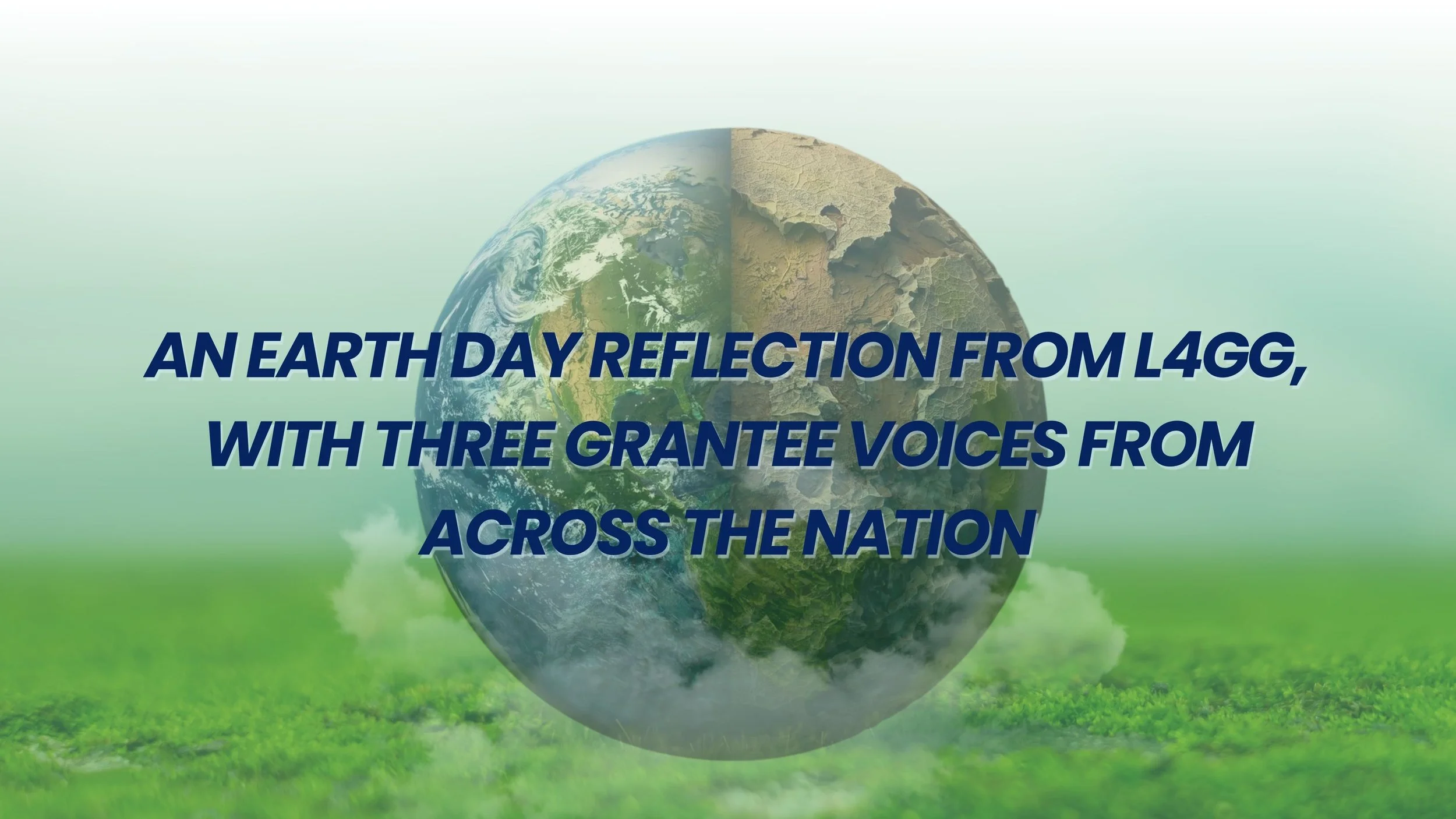
This Earth Day, we’ve worked with three grantees to share their stories in their own words:
Why This Moment Demands Your Action
We’ve spent the past decade fighting in courtrooms, in Congress, and alongside communities who have been forced to fight for the most basic protections, and while this moment is not news, the scale is, and it will take all of us to fight back.
This Earth Day, we’re marking this Administration’s failure to deliver on the promise of protecting American lives and our very basic human right to breathe clean air, drink clean water, and exist on a livable planet. Join us in helping to deliver on this promise anyway, in the absence of federal leadership.
Because the child I think about - the one whose family had to save its weekly earnings to buy bottled water to cook food safely - deserves better. Help us fight for their future.