
Written by Zane McNeill, Civil Rights & Health Equity Legal Fellow
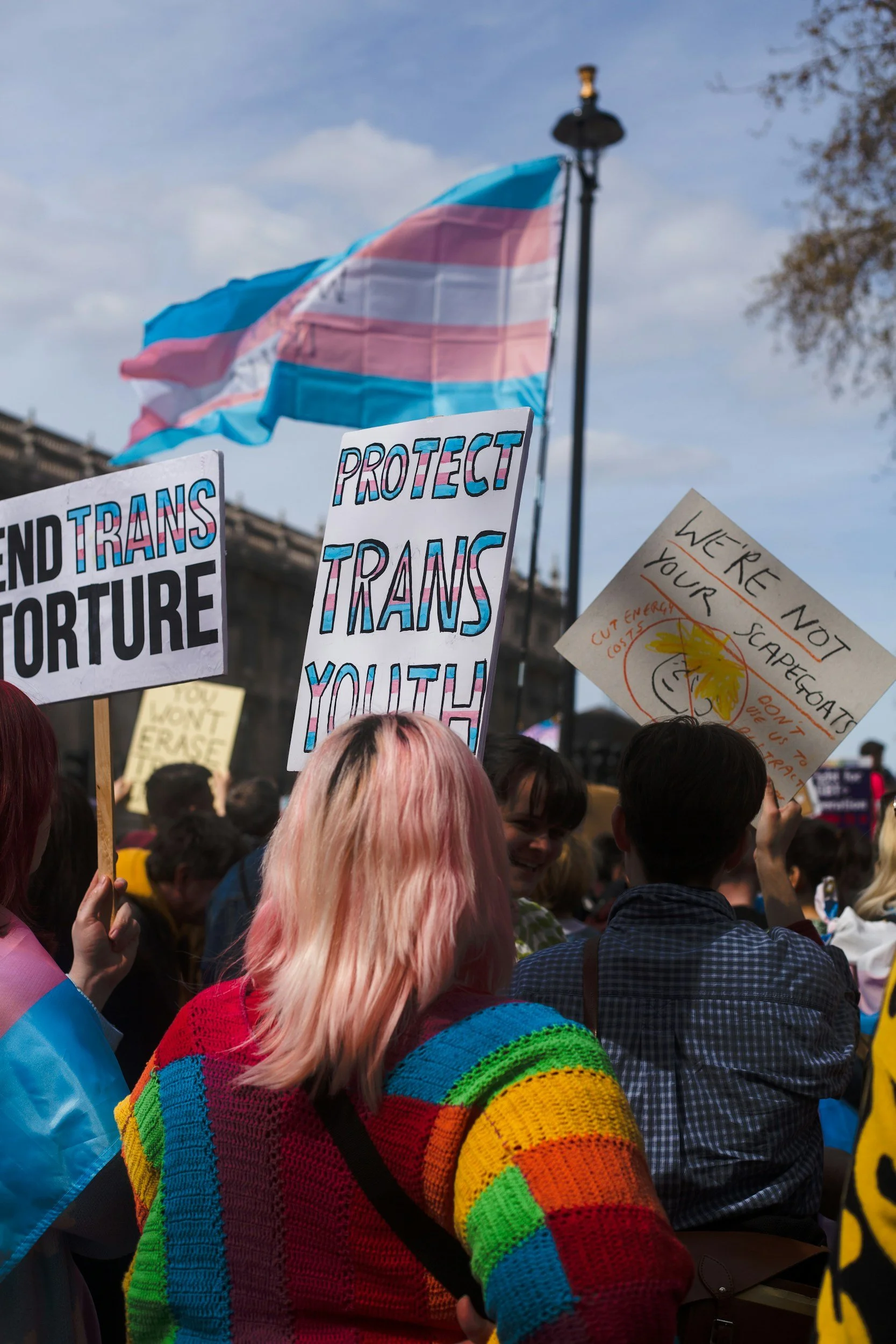
Reproductive justice and transgender liberation are deeply connected, grounded in the shared principles of bodily autonomy, self-determination, and freedom from discrimination and state violence. Reproductive justice affirms the right to control one’s body, sexuality, and reproduction—regardless of gender identity—and is essential for both cisgender and transgender people. At its core, it upholds the right to have children, not have children, and to raise those children in safe and healthy environments. Similarly, transgender liberation requires that all people have control over their own bodies and gender identities, and are able to access medical care without government interference and coercion. In many ways, as Borealis Philanthropy has explained: “Trans liberation and reproductive rights aren’t parallel fights; they are one and the same.”
Both reproductive rights and trans rights are under attack. The far-right has increasingly sought to restrict bodily autonomy, undermining the safety, dignity, and full sovereignty every person should have over their own bodies. Following an orchestrated multi-decade strategy to erode bodily autonomy by appointing conservative judges to the bench and spreading anti-abortion misinformation, the Supreme Court repealed the constitutional right to an abortion in Dobbs v. Jackson Women’s Health Organization in 2022. In the wake of the decision, several anti-abortion states immediately banned or heavily restricted abortion care. According to the Guttmacher Institute, 41 states now have abortion bans in effect—13 states have a total abortion ban, and 8 states ban abortion at or before 18 weeks’ gestation.
Since 2022, states have also passed laws targeting interstate travel for abortion care and criminalizing people who help pregnant people access abortion care. Pregnant people themselves have also faced increased surveillance and criminalization based on adverse pregnancy outcomes and access to abortion care. According to Pregnancy Justice, in the first two years after the Dobbs decision, prosecutors initiated at least 412 cases in 16 states charging pregnant people with crimes related to pregnancy, pregnancy loss, or birth.
Restrictions and bans on abortion care have a disproportionate effect on LGBTQ+ people, including intersex, transgender and nonbinary people. Access to reproductive healthcare—including abortion care, assisted reproduction, contraception access, and pregnancy care—is necessary for both cisgender and transgender people. Many intersex, trans and nonbinary people use contraception, can and do get pregnant, have abortions, carry pregnancies, and become parents.
Laws that restrict a person’s ability to access reproductive healthcare are a trans rights issue because they restrict a person’s ability to have control and autonomy over their own bodies. At the same time, gender-affirming care is itself a form of reproductive healthcare because it can directly shape a person’s reproductive development and capacities and may be imperative for a person’s bodily autonomy. In fact, many trans people see access to gender-affirming care as a way to control their reproductive futures. Thus, attacks on gender-affirming care are also attacks on reproductive rights and attacks on reproductive rights are attacks on trans rights.
This is not news to the far-right, whose attacks on reproductive healthcare and gender-affirming care are, in fact, part of the same playbook. Anti-trans politicians have also been using the same tactics they used to undermine access to abortion to erode healthcare access for trans people and, in many cases, the same lawmakers and conservative think tanks are behind both anti-abortion and anti-trans laws. In fact, of the 21 states that have an 18-week or total abortion ban, all of them also have also enacted bans on best practice medical treatment for trans youth and most of them prohibit trans people from using bathrooms and other facilities such as locker rooms that are consistent with their gender identity. Recently, the far right is also bundling anti-trans provisions into anti-abortion ballot initiatives to use anti-trans sentiment to pass unpopular abortion restrictions.
These intersections between reproductive justice and transgender rights necessitate that our movements do not operate in siloes, but instead work together to achieve bodily autonomy for all people. At Lawyers for Good Government, our Gender Justice & Health Equity team is currently tracking the attacks on reproductive rights on our Policy Resource Hub for Reproductive Health and transgender rights on our Policy Resource Hub for Transgender Rights. We also publish biweekly newsletters highlighting major changes in the laws regarding reproductive health and recently launched our new transgender rights digest on Trans Day of Visibility.
With these tools, we are hopeful that we will be able to combat the intersecting attacks on gender-affirming care and abortion care together by building collective power and fighting for reproductive and transgender liberation. If you are interested in being part of the movement for reproductive and transgender liberation, sign up for our biweekly reproductive rights and transgender rights digests and volunteer on our team’s media tracking project.