Written by Zane McNeill, Civil Rights & Health Equity Legal Fellow
Bodily autonomy, the fundamental right to make decisions about one’s own body without coercion or harm, and health equity, the principle that everyone is able to attain their full potential for health and wellbeing, depend on freedom from state violence. State violence refers to the use of force, intimidation, and oppression by a government against citizens and noncitizens alike, and is deeply entangled with white supremacy, policing, and criminalization. These systems are fundamentally incompatible with the tenets of bodily autonomy and health equity, as they function as root causes of health disparities by undermining community health—heightening psychological distress, worsening pregnancy outcomes, and restricting access to medical care.
The irreconcilability between bodily autonomy, health equity, and state violence has been made extremely visible by the detention and discriminatory practices of Immigration and Customs Enforcement (ICE). In January, approximately 73,000 people were held in ICE detention in severely overcrowded facilities. Many detainees have reported abusive conditions, including sexual violence and medical neglect. In 2025, thirty-two people died while in ICE custody, the majority of which were connected to lapses in medical care that violated agency guidelines.
Despite an existing ICE policy generally prohibiting the detention and deportation of pregnant, postpartum, or nursing people, records from April 2025 show that one detention facility in southern Louisiana was holding 14 pregnant women. Because ICE no longer releases public data on pregnant detainees, the total number held in custody is unknown. Pregnant people in custody have reported experiencing serious lapses in care, including delayed or inadequate prenatal treatment, lack of access to prenatal vitamins, placement in solitary confinement, and medical neglect that has resulted in infection following miscarriage.
One woman who discovered she was pregnant while being held in ICE custody told The 19th that she suffered severe cramping and heavy bleeding during her detention yet received no medical attention beyond a single emergency room visit. In another case, a woman who was eight-months pregnant and was experiencing intense abdominal and back pain, along with nausea and vomiting, was refused medical treatment and ultimately deported, according to The Guardian. ICE agents have also been reported to have shoved a pregnant woman a week before she was scheduled to give birth. She told NBC News that she then started experiencing sharp pain leading to a hospitalization.
The detrimental consequences on health equity by ICE also extend to people outside detention. KFF survey data shows that about one-third of immigrants experience adverse health effects due to concerns about their own or a family member’s immigration status. Immigrant children also face mental health distress due to fears of family deportation and bullying related to their parents’ immigration status; in some cases, these pressures have pushed children to complete suicide.
The chronic stress and trauma of these situations contribute to broader public health crises, from the weathering effects of racism to people avoiding medical care amid growing reports of ICE agents entering hospitals. In fact, the majority of health care workers have reported reductions in patient visits following Trump’s 2025 executive orders on immigration, with some observing an increase in children arriving alone at emergency departments and critical illnesses going undiagnosed until later stages. Research also suggests that immigration enforcement activity in nearby communities causes adverse birth outcomes among Hispanic mothers. Not only are pregnant people and new mothers postponing prenatal or postpartum care due to detention concerns, but researchers found that immigration raids negatively impact the health of both immigrant and U.S.-born Hispanic mothers in the area.
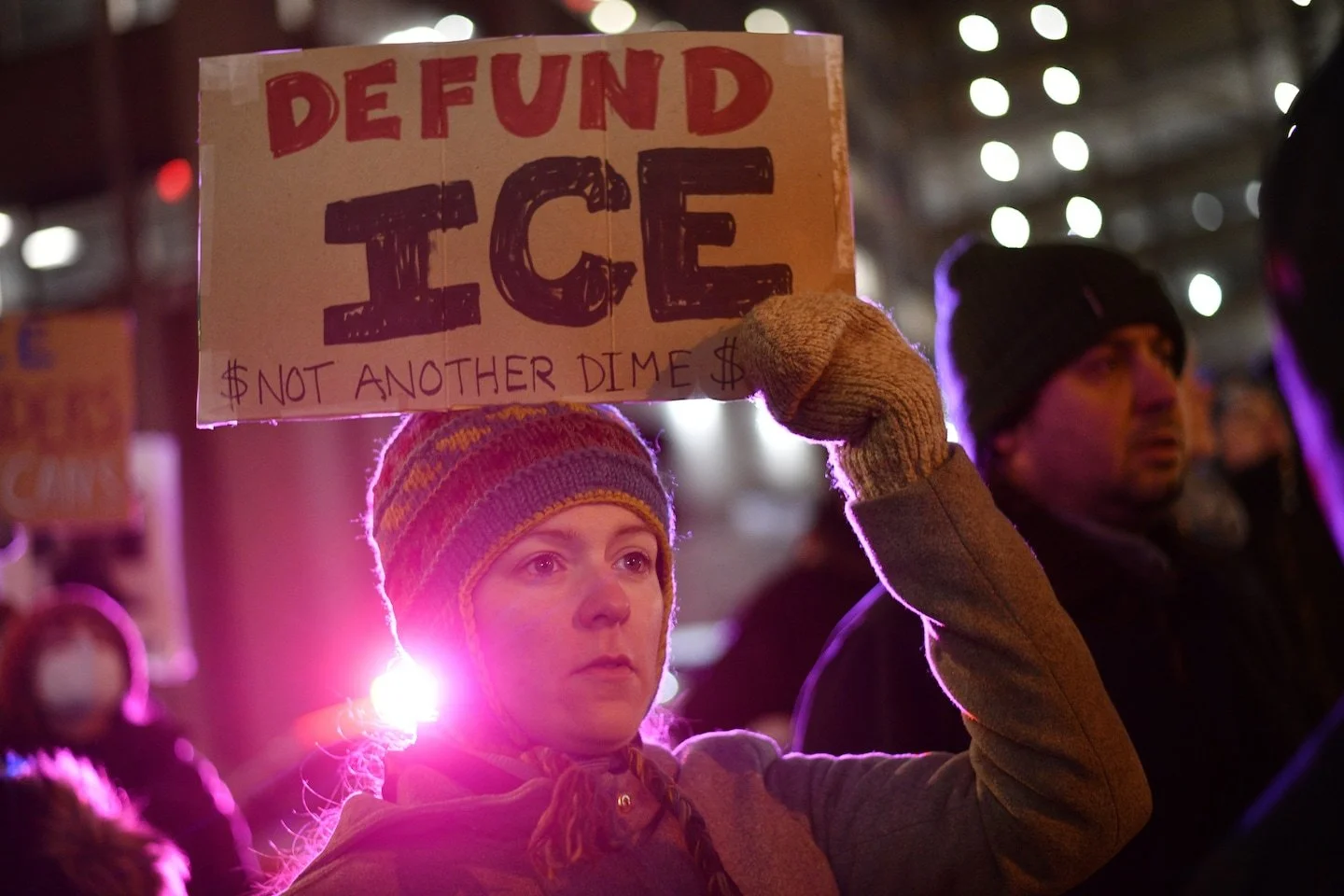
We believe that bodily autonomy and health equity can only be achieved by defunding systems of state violence embodied by ICE and other agencies rooted in policing and criminalization. This is why Lawyers for Good Government was one of more than 1,000 organizations to sign on to a letter demanding that Congress halt all funding to ICE and Customs and Border Patrol (CBP). There are many ways lawyers can stand up to agencies that enact state violence in our communities—you can send a letter to Congress demanding no new funding for ICE and an end to CBP operations in U.S. cities; volunteer for remote or in-person intakes, bond hearings, and habeas petitions through our Detention Bridge Project; and help asylum seekers obtain work permits.