Written by Estuardo Cifuentes, Program Manager for Project Corazon
Over the past several weeks, Minnesota has become an unsettling mirror of something deeper than a series of federal enforcement operations. Numerous videos have circulated on social media documenting hostile interactions between agents of U.S. Immigration and Customs Enforcement (ICE) and members of the public: officers confronting people who are filming them, issuing verbal threats, or attempting to seize their phones by force.
All of this is happening despite the fact that recording law enforcement officers in public spaces is protected by the First Amendment, so long as it does not interfere with legitimate law enforcement activity. That legal nuance matters. But what we are witnessing goes far beyond a technical debate about boundaries. What is at stake is how power is exercised when it no longer recognizes itself as constrained by law.
These videos are not isolated incidents. Taken together, they raise an urgent question:
What does this pattern tell us about how ICE is using threats and force in its interactions with the public?
In one of these recordings, a citizen tells an agent that his conduct is shameful. The officer’s response is not a legal warning or an operational instruction. Instead, he asks whether the “recent events” have failed to “teach” the citizen a lesson. The reference is clear: two U.S. citizens killed by federal agents in the days prior. Moments later, the same officer attempts to forcibly take the person’s phone.
The question is unavoidable: Is this a threat?
In another, even more alarming video, a federal agent tells a citizen:
“Let me tell you this: if you raise your voice, I will erase your voice.”
This language is not accidental. In the classical Greek tradition, this kind of excess had a name: hybris.
For the Greeks, hybris was not simply arrogance or pride. It was something far more dangerous: the belief that one could act without limits, without accountability, and without recognizing law, community, or proportion. It marked the precise moment when power ceased to be understood as a responsibility and instead became confused with an absolute right to do anything. That is why, in Greek tragedy, hybris always precedes disaster.
This framework matters because, in Minnesota, we are not dealing with abstract metaphors. Widely circulated videos documented how Renee Good and Alex Pretti, both U.S. citizens, were killed by federal agents. It is within this atmosphere of violence, impunity, and extreme tension that an agent does not merely threaten a citizen—but threatens to “erase” their voice.
That phrase is critical.
The agent does not say I will arrest you, cite you, or order you not to interfere. He says, “I will erase you.” He does not speak of sanction or process. He speaks of elimination. This is the fantasy of absolute power: not to punish, not to judge, not to prosecute, but to make the other disappear.
That is hybris in its purest form.
And it reveals something even more troubling: this is not simply an individual lapse. It reflects a deeper shift in which some agents no longer see themselves as enforcers of the law, but as the law itself, empowered—or convinced they are empowered—by their superiors. When that happens, procedure becomes an obstacle, rights become inconvenient, and accountability is perceived as an attack.
When a federal agent speaks this way, they are rehearsing a form of power that no longer recognizes limits.
The Greeks understood this thousands of years ago: when hybris takes hold of those who wield force, the fall is not always immediate—but the damage has already begun. Societies that ignore these warning signs often pay a very high price.
The legal response: Building Bridges where power wants walls
In the face of this reality, the question is not only what ICE is doing—but what we are doing in response.
At Lawyers for Good Government, we understand that abuses of power are not countered by outrage alone, but by legal structure, rigorous documentation, institutional presence, and direct accompaniment, particularly in the immigration context. That is why we are developing the Detention Bridge Project, an initiative specifically focused on immigrants detained in immigration enforcement operations, many of whom face detention and deportation proceedings without meaningful access to legal representation.
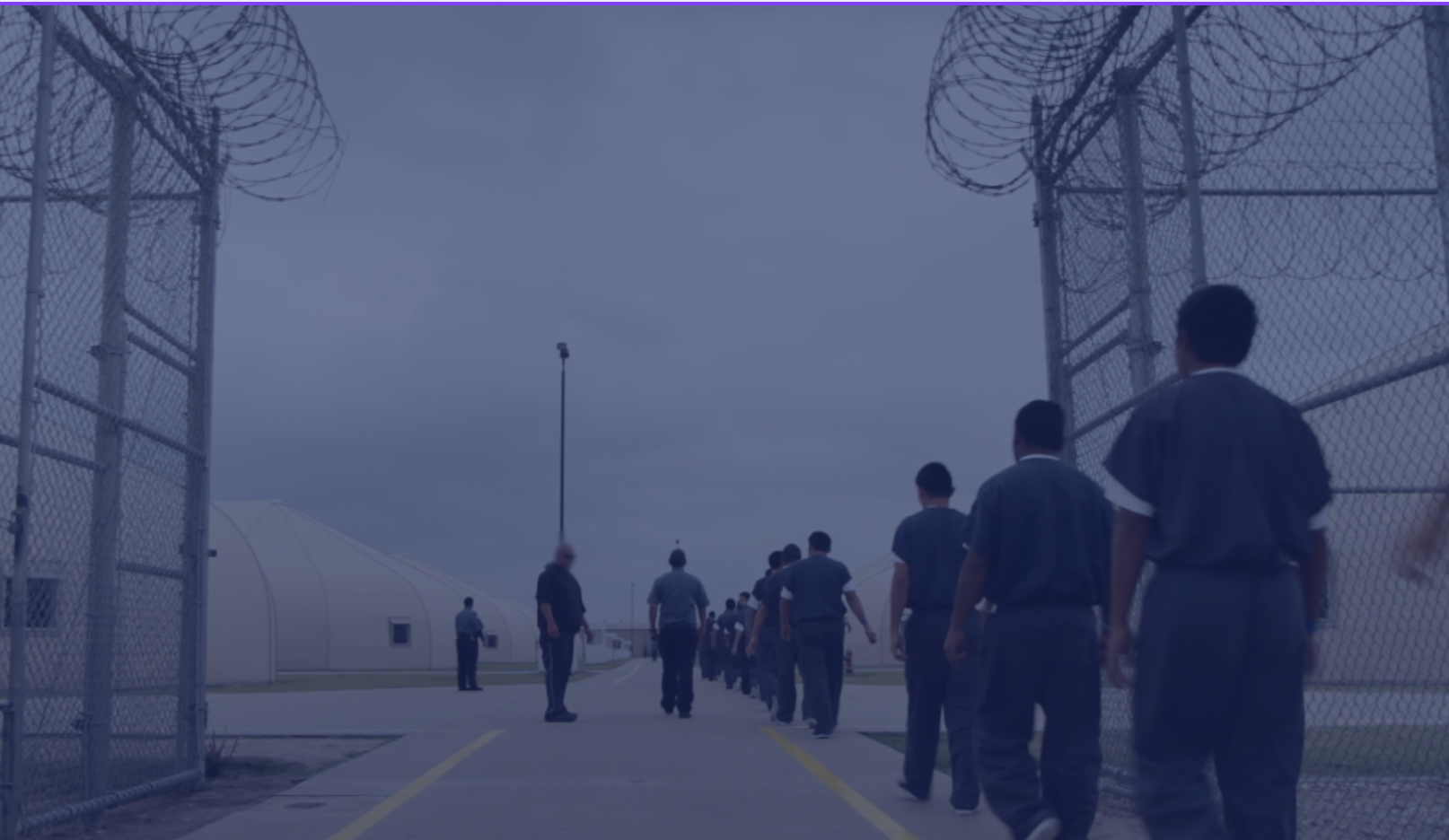
Detention Bridge emerges from a stark reality: thousands of people detained through immigration operations remain in detention centers without real access to attorneys, at a time when federal use of force is intensifying and due process protections are increasingly fragile. The project seeks to build bridges where the system has erected barriers—connecting lawyers with detained individuals, documenting patterns of abuse, standardizing critical information about immigration detention centers, and creating real mechanisms for accountability.
The goal is not solely the resolution of individual cases—although legal representation remains a decisive factor in the life and liberty of detained individuals—but to reinsert the rule of law where power is attempting to operate without it. To reaffirm that the law does not belong to those who carry weapons or badges, but to the community and to the constitutional principles it is meant to protect.
For lawyers, organizations, and defenders of the rule of law, this moment demands more than critical observation. It demands organized, strategic, and sustained action. When power falls into hybris, the law itself becomes a form of democratic resistance.