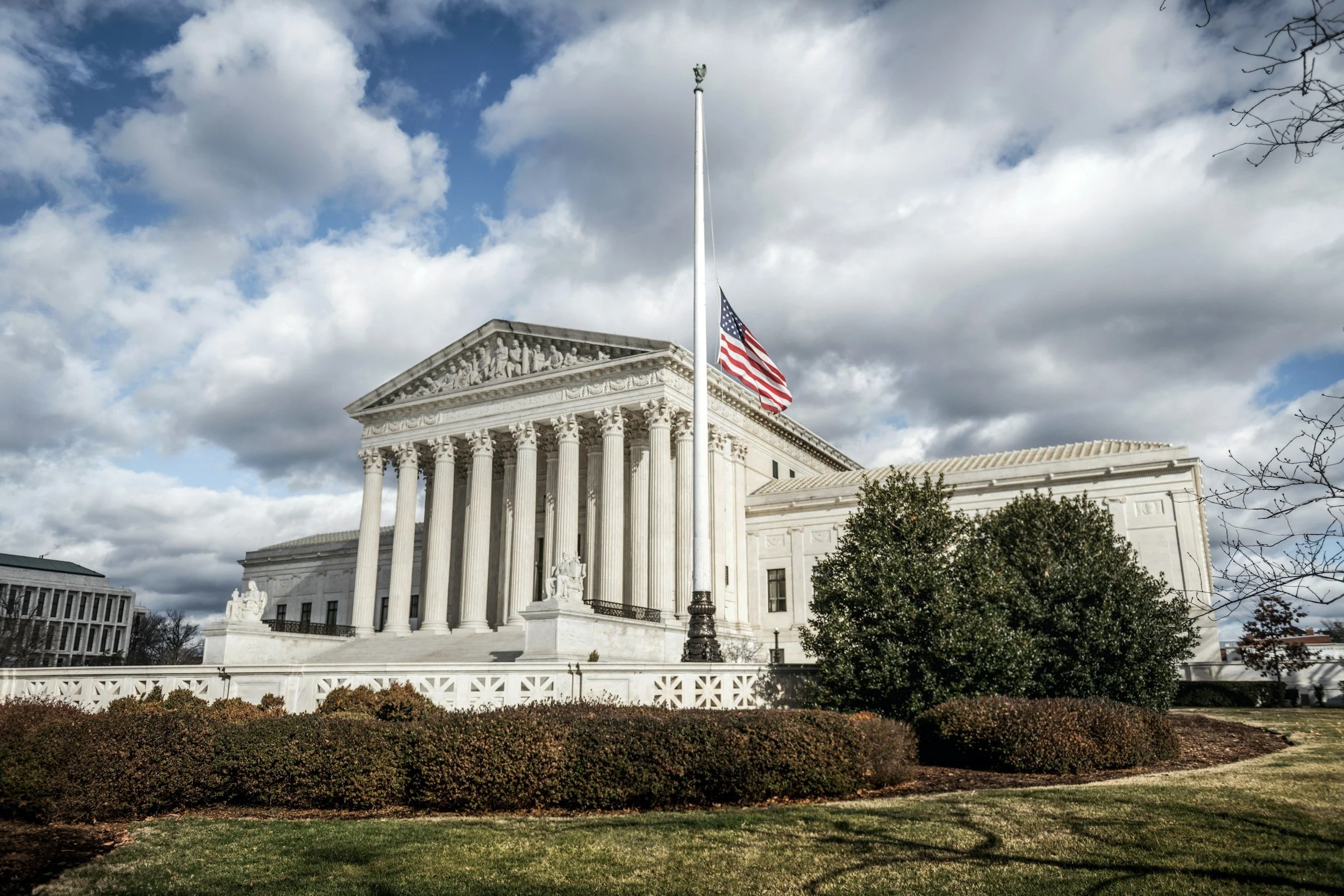
As counsel to amici Professor Victoria Nourse and Lawyers Defending American Democracy, Lawyers for Good Government (L4GG) filed an amicus brief in Donald J. Trump, et al. v. Rebecca Kelly Slaughter, et al., a case before the U.S. Supreme Court challenging the constitutionality of the Federal Trade Commission’s structure and threatening the future of independent federal agencies across government.
Nonprofits, Tribes, and Local Governments Appeal Ruling Allowing EPA to Terminate Environmental Justice Grants
Plaintiffs ask D.C. Circuit to restore congressionally mandated funds; without relief, 350+ pollution-reduction and climate-resilience projects remain frozen
WASHINGTON — A coalition of nonprofits, Tribes, and local governments today filed an appeal in the U.S. Court of Appeals for the D.C. Circuit, challenging the lower court ruling that suggests the District Court does not have jurisdiction to hear claims related to EPA’s termination of the Congressionally-mandated Environment and Climate Justice (ECJ) Block Grant program, which Congress mandated to fund local projects addressing pollution, flooding, and climate resilience.
The plaintiffs—represented by Earthjustice, the Southern Environmental Law Center (SELC), the Public Rights Project, and Lawyers for Good Government (L4GG)—seek to restore $3 billion in Congressionally authorized funding that has been unlawfully terminated for more than 350+ grantees.
VIEW THE FILING HERE
Across the country, hundreds of local projects remain stalled, including critical infrastructure work in the Native Village of Kipnuk, Alaska, where recent catastrophic flooding washed away homes and infrastructure that were set to be protected under an EPA-funded riverbank stabilization project. Kipnuk is now facing another winter without housing or protection, and has had to start a Go Fund Me page to pay for emergency services. And, they are far from alone. With hurricane season underway, communities in every region—in particular, the Southeast—remain more vulnerable to storms, flooding, and pollution because this funding was taken away.
““We’re already seeing the human toll of EPA’s unlawful decision in these flood-ravaged Alaskan villages, which could have had $20M available for emergency riverbank stabilization work if the EPA hadn’t terminated the Kipnuk grant in May of this year. This is the result of an Administration prioritizing tax breaks for billionaires at the cost of human lives and critical infrastructure,” said Jillian Blanchard, Vice President of Climate Change & Environmental Justice at Lawyers for Good Government.”
“ “Inevitably, we will see more tragedies in coastal towns as hurricane season approaches that could have been mitigated. Resilience hubs in Louisiana will not be built, and as more natural disasters strike due to the heartless rescission of these grants, we’re likely to see more and more avoidable tragedies. The Administration’s choice to strip away these lifelines endangers lives, undermines the law, and abandons the very communities Congress promised to protect. If you consider these terminations with the significant reduction in disaster-relief FEMA funding, we’re staring down the barrel of a climate catastrophe waiting to happen. We’re appealing because the stakes couldn’t be higher.””
If successful, the appeal would reinstate the ECJ grants, allowing more than 350 communities and Tribal governments to resume critical projects—ranging from flood prevention to community resilience hubs—before more preventable destruction occurs.
# # #
Lawyers for Good Government (L4GG) is a nonprofit organization that harnesses the power of 125,000 lawyers, law students, and advocates in the fight for justice. We identify where lawyers can make the greatest impact and mobilize them to defend democracy and the rule of law, protect civil and human rights, and advance environmental justice through coordinated legal action and advocacy efforts that create meaningful change for all Americans.
L4GG Denounces Trump’s Demand for $230 Million in DOJ Payouts
Amy Powell, Litigation Director at Lawyers for Good Government (L4GG), and former Senior Trial Counsel at the Department of Justice’s (DOJ) Civil Division, issued the following statement in response to reports that Trump is demanding the DOJ pay him $230 million for past cases:
In Celebration of Pro Bono Week, Lawyers for Good Government Honors Davis Wright Tremaine with 2025 Outstanding Pro Bono Partner Award
In recognition of the National Celebration of Pro Bono (October 19–25, 2025), Lawyers for Good Government (L4GG) proudly honors Davis Wright Tremaine LLP (DWT) as a recipient of the 2025 Outstanding Pro Bono Partner Award, celebrating the firm’s extensive contributions across immigration, climate, and democracy-focused legal initiatives.
Over the past several years, Davis Wright Tremaine has been a cornerstone partner in L4GG’s efforts to expand access to justice — from helping immigrants secure work authorization and stability to supporting research and education efforts that strengthen climate and environmental policy. Across each initiative, DWT attorneys have shown what it means to use legal expertise as a tool for progress and equity.
In Celebration of Pro Bono Week, Lawyers for Good Government Honors Perkins Coie with 2025 Outstanding Pro Bono Partner Award
In recognition of the National Celebration of Pro Bono (October 19–25, 2025), Lawyers for Good Government (L4GG) proudly honors Davis Wright Tremaine LLP (DWT) as a recipient of the 2025 Outstanding Pro Bono Partner Award, celebrating the firm’s extensive contributions across immigration, climate, and democracy-focused legal initiatives.
Over the past several years, Davis Wright Tremaine has been a cornerstone partner in L4GG’s efforts to expand access to justice — from helping immigrants secure work authorization and stability to supporting research and education efforts that strengthen climate and environmental policy. Across each initiative, DWT attorneys have shown what it means to use legal expertise as a tool for progress and equity.
In Celebration of Pro Bono Week, Lawyers for Good Government Honors Clean Energy Counsel with 2025 Outstanding Pro Bono Partner Award
In celebration of the National Celebration of Pro Bono (October 19–25, 2025), Lawyers for Good Government (L4GG) is proud to recognize Clean Energy Counsel (CEC) as a recipient of the 2025 Outstanding Pro Bono Partner Award.
Clean Energy Counsel has been a dedicated partner to L4GG for more than seven years, providing expert legal guidance and strategic support across a wide range of initiatives — from climate and environmental justice to civil rights and access to legal information. The firm’s attorneys combine subject-matter expertise with a mission-driven commitment to strengthening the rule of law and advancing equity through their pro bono service.
Give Us The Tools, Governor Hochul!
Over the past nine months, lawyers across the country have fought tirelessly to protect people’s rights to gender-affirming healthcare, reproductive healthcare, and the privacy and security of their highly personal medical data. However, we can only fight using the tools provided to us through the law. Now, a slate of three new laws protecting care is set to go before Governor Hochul – it is critical that they be signed into law.
Lawyers for Good Government and Partners Sue EPA to Restore ‘Solar for All’ for Low-Income Families and Tribal Communities
RHODE ISLAND — Lawyers for Good Government (L4GG), together with the Conservation Law Foundation, Southern Environmental Law Center, and Lawyers’ Committee for Rhode Island, today filed a federal lawsuit in the U.S. District Court of Rhode Island, on behalf of a coalition of businesses and nonprofits, challenging the Environmental Protection Agency’s unlawful termination of Solar for All.
The complaint, filed on behalf of the plaintiffs, Rhode Island AFL-CIO, Rhode Island Center for Justice, the Hopi Tribal Council, Solar United Neighbors, Sunpath Consulting, 2KB Energy Services, Energy Independent Solutions, and Black Sun Light Sustainability, asks the court to declare EPA’s termination unlawful, vacate the action, enjoin any de-obligation or interference with funds, and direct EPA to reinstate Solar for All so projects can proceed as intended.
A $7 billion program authorized by Congress, Solar for All represents a generational opportunity to cut skyrocketing power bills, create good-paying jobs, and equip communities to address the causes and consequences of a changing climate. All that funding is intended to get affordable solar power to more people through new leasing and power purchase programs, multifamily installations, workforce development and more.
What’s at stake:
Household savings & access: According to the EPA’s own estimates, the program was projected to help nearly 900,000 households access solar energy, with participating households collectively saving more than $350 million each year on utility costs and typical low-income households saving ~$400 per year.
Jobs & training: Hundreds of thousands of high-quality jobs and apprenticeship pipelines with labor partners now at risk.
Public health & climate: EPA estimated more than 30 million metric tons of carbon dioxide avoided, which is equal to taking 7 million cars off the road.
Tribal communities: More than 7% of funds slated for Tribal nations. On the Hopi reservation, where nearly 35% of homes lack electricity, distributed solar is the only feasible option for reliable power.
““EPA’s termination of the $7 billion Solar for All program is a betrayal against a million American families and communities who need access to clean, affordable energy,” said Jillian Blanchard, Vice President, Climate Change & Environmental Justice at L4GG. “By terminating the Solar for All program while simultaneously ending clean air protections, this administration is sending a clear message: they will make Americans pay with their savings and their health in order to benefit the fossil fuel industry. We will not allow this administration to trample the legal rights of Americans, and we will keep fighting for a clean, affordable future for the people and the planet.””
““The executive branch cannot rewrite laws it dislikes or claw back billions already obligated by Congress. If allowed to stand, this would set a dangerous precedent where no federal program is safe from political targeting,” said Gary DiBianco, counsel at L4GG’s Pro Bono Litigation Corps.”
If you’re interested in speaking with Jillian Blanchard, Gary DiBianco, and impacted plaintiffs, let us know and we can look to arrange.
# # #
Lawyers for Good Government (L4GG) is a nonprofit organization that harnesses the power of 125,000 lawyers, law students, and advocates in the fight for justice. We identify where lawyers can make the greatest impact and mobilize them to defend democracy and the rule of law, protect civil and human rights, and advance environmental justice through coordinated legal action and advocacy efforts that create meaningful change for all Americans.
L4GG Launches Elective Pay Sprint Hub to Help Communities Navigate Complex Clean Energy Requirements and Pay for Projects after HR 1
WASHINGTON — Lawyers for Good Government (L4GG) today announced the launch of its Elective Pay Sprint Hub, a rapid-response initiative designed to help schools, Tribes, nonprofits, faith organizations, and local governments navigate the complex landscape of clean energy tax credits in the wake of the “One Big Beautiful Bill Act” (OBBBA, or H.R. 1).
With the Trump administration’s escalating efforts to rescind and terminate grant programs, including billions in clean energy and environmental justice funding authorized under the Inflation Reduction Act, community-based projects across the country face steep new compliance hurdles around tax credit requirements and shrinking timelines. These unlawful attempts to claw back funding threaten to derail investments in rooftop solar, battery storage, school and hospital upgrades, and other community-based clean energy solutions that reduce energy costs and improve climate resilience. Tax credit dollars are available, but they’ve become harder to understand and realize.
The Elective Pay Sprint Hub will serve as a concierge service for tax exempt entities to work with L4GG and its partners to design, fund, and implement their clean energy projects in a way that maximizes tax credits, providing:
Legal and technical support to interpret shifting Treasury and IRS guidance on “placed-in-service” and “beginning-of-construction” requirements.
Policy expertise to maximize available clean energy tax credits before they phase out.
Specialized assistance for projects in disadvantaged communities, or those at risk of being stalled or cancelled due to unlawful rescissions.
Green Financing opportunities connecting L4GG's clients with investors and providing the legal support necessary to build investor confidence in these projects.
“Communities should not lose out on clean energy progress because of political gamesmanship in Washington that convolutes tax credit requirements and shrinks timelines for the credits that remain available. Congress approved this money to lower energy bills, strengthen resilience against disasters, and expand access to clean energy,” said Jillian Blanchard, Vice President of Climate Change & Environmental Justice at L4GG.
“The Elective Pay Sprint Hub exists to ensure communities can still capture those benefits before the window slams shut. It also connects entities with real financial solutions to bridge funding gaps,” said Edward Yim, L4GG’s Director of Clean Energy. “L4GG is committed to helping cities, schools, religious institutions, and communities fight for every dollar they need to implement critical clean energy and resilience projects.”
L4GG is partnering with an extensive network of partners to carry out this mission, including the Milken Institute and its $1B Capital Mobilization Campaign, World Resources Institute, Urban Sustainability Directors Network, NYU Tax Law Center, Natural Resources Defense Council, the US Climate Alliance, Justice Climate Fund, Community Progressive Caucus Center, S2 Strategies, and the GB 50, among many other partners who are ready to work with L4GG to push clean energy projects forward.
L4GG is inviting nonprofits, Tribes, faith-based groups, schools, and local governments with pending or at-risk projects to complete a simple intake form and join the Sprint Hub. The initiative will connect projects with pro bono legal support, policy expertise, and technical partners to unlock credits while they remain available.
To sign up for assistance, please fill out the form HERE.
L4GG Files Amicus Brief Defending $20 Billion Clean Energy Fund From Trump Administration Power Grab
WASHINGTON — Today, Lawyers for Good Government (L4GG) filed an amicus brief as counsel for 40 U.S. Senators and U.S. Representatives, urging the D.C. Circuit Court of Appeals to rehear a case over the Trump administration’s cancellation of the Greenhouse Gas Reduction Fund (GGRF).
The brief argues that the Environmental Protection Agency’s termination of $20 billion in Congressionally mandated clean energy grants, and attempt to claw back already-disbursed funds, is unconstitutional and sets a dangerous precedent.
““Congress created, funded, and directed EPA to deliver this money to build clean energy projects that cut pollution and lower energy bills,” said Jillian Blanchard, Vice President of Climate Change & Environmental Justice at L4GG. “EPA cannot simply undo the law by executive fiat. That’s a violation of the Constitution’s separation of powers.””
The brief, which you can read in full here, argues:
Congress has the exclusive “power of the purse.” Under the Appropriations and Spending Clauses, only Congress decides how federal funds are allocated.
EPA’s termination was a power grab. By nullifying programs after money had already been awarded and transferred, the administration usurped Congress’s authority.
The panel’s decision rewrites precedent. By leaning on a misreading of Dalton v. Specter, the panel ignored clear Supreme Court rulings (Train v. New York, Clinton v. New York) that prohibit the executive branch from refusing to spend funds Congress appropriated.
If allowed to stand, the ruling creates a de facto line-item veto. Any future administration could cancel duly authorized programs and seize funds Congress already appropriated, undermining democracy and destabilizing community investments.
““This is not a routine contract dispute—it is a constitutional power grab,” said Gary DiBianco, counsel at L4GG’s Pro Bono Litigation Corps. “If the executive can claw back billions that Congress has already spent, then Congress’s power of the purse is deemed insignificant.””
The GGRF was created by the Inflation Reduction Act to invest nearly $20 billion in projects that reduce pollution, lower energy costs, and build resilience in disadvantaged communities. Hundreds of organizations have already begun planning and hiring around these funds, which are now in jeopardy. If you’re interested in learning more about some of those communities and projects impacted, we’d be happy to potentially arrange interviews.