
L4GG: SCOTUS Majority Puts Access to Emergency Abortions Back on Shelf, Leaves Federal Supremacy Questions Unanswered

SCOTUS' Inaction on Idaho Abortion Law Exposes Judicial Avoidance, Endangers Health Protections

Washington, D.C. - Lawyers for Good Government (L4GG),  the nation’s largest community of attorneys committed to human rights and equal justice, finds the Supreme Court’s decision to reverse course on accepting Idaho’s petition for relief in Moyle v. United States absolutely necessary to restore Idahoans’ access to emergency healthcare in the short term, but woefully insufficient to protect the rights of millions of Americans under the federal Emergency Medical Treatment and Labor Act (EMTALA). We call on the Court to use its authority to vindicate the supremacy of federal law over state abortion bans that restrict access to emergency care. The Court’s dismissal of the case as improvidently granted leaves pregnant people facing emergencies and the doctors who treat them in a precarious legal limbo and fails to contend with the very real harm created by the Court’s prior decision to allow Idaho to fully enforce its ban over EMTALA’s clear mandate. 

The Court's ruling returns the issue to the lower courts, allowing emergency abortions to resume in the state, but failing to provide an answer to the critical questions raised in the litigation. Although the decision did not affirmatively greenlight Idaho’s backwards interpretation of EMTALA, it also did not confirm the reality that federally mandated emergency healthcare should not be held hostage by state-level restrictions.

“The Court majority’s decision to wish away the conflict between state and federal law presented by Idaho’s abortion ban is a deeply unethical avoidance of judicial responsibility. This procedural dodge leaves essential, long-established health protections in limbo, which is far from a victory for those advocating for reproductive rights and maternal health equity.”
— Khadijah Silver (JD/MPH), L4GG’s Supervising Attorney for Civil Rights
“While the Court’s decision today does not take the extraordinary step of expressly allowing a draconian state abortion ban to override clear federal law, it is far from the vindication of the rights of pregnant people that is needed to safeguard access to critical life-saving emergency abortion care. The Court’s refusal to use its authority to reject states’ attempts to curtail basic liberties is not a victory but an abdication of judicial responsibility.”
— Alyssa Morrison, L4GG’s Staff Attorney for Reproductive Justice

Legal Basis and Broader Implications:

Today’s decision is neither for nor against Idaho. Instead, the Court removed the stay of the District Court’s opinion that it previously put into place and decided it should never have heard the case in the first place. The removal of this stay will allow emergency abortions to resume in the state, but it cannot remedy the very real harm created by its imposition in the first place. The Court’s decision to dismiss the case back to the lower courts also does not answer the critically important question of whether a state can turn well-established principles of preemption on their head and impose its own draconian abortion restrictions over the federally mandated provision of emergency healthcare. As long as this question remains unresolved, the rights of pregnant people continue to hang in the balance.

Response and Action Plan:

Shortly after the end of the court session, Lawyers for Good Government will host a “SCOTUS Wrapped” event to discuss the implications of the Court’s actions in Moyle and other crucial cases - we invite you to subscribe to get updates and stay informed.

We will also continue to work with healthcare providers and legal advocates to protect patients' rights nationwide. One way we support our partners is through our Policy Resource Hub for Reproductive Health, a vital, constantly updated tool for patients and providers to find legal guidance, up-to-date policy analysis, and advocacy tools aimed at navigating the evolving landscape of reproductive health laws. The Hub serves as a central platform for mobilizing grassroots support and equipping stakeholders with the information necessary to advocate for comprehensive reproductive healthcare access.

L4GG Celebrates Becky Teiwes as Volunteer of the Month

We are excited to introduce Becky Teiwes as our June Volunteer of the Month! Becky’s exceptional dedication has been instrumental in supporting our mission. From providing essential services at detention centers to assisting with local clinics for documented and undocumented immigrants, Becky’s contributions have made a tangible impact on the communities we serve. Read on to learn more about Becky’s inspiring journey and her invaluable work with Project Corazon.


Meet Becky Teiwes - From Classroom to Borderlands Advocacy

With a background in education, Becky spent many years teaching high school Spanish in Massachusetts, integrating lessons on human rights and migration into her curriculum. However, her drive to create a more direct impact inspired a profound shift in her career and life, leading her to the US-Mexico border in October 2021. Becky is currently the Borderlands Program Coordinator for the Mennonite Central Committee. 

A Journey Rooted in Compassion and Action 

Becky’s transition from the classroom to the frontlines of humanitarian work was sparked by a deep-seated need to be physically present where the need was greatest. 

I was teaching about the border and our response to it, feeling increasingly disconnected from the very issues I was passionate about,” she explained.

Motivated by the zero-tolerance policy and the devastating impact of family separations, Becky decided it was time to move beyond the theoretical and engage directly with the humanitarian challenges at the border.  Reflecting on her career shift, Becky shared: 

I just got tired of teaching about the border and about US foreign policy in Central America and…feeling like there was something we needed to do as a country…we moved to the US-Mexico border in October of 2021. I would say in response to child separation… zero-tolerance policy, I think that was really the straw that broke the camel’s back for me.
 

Discovering L4GG and Making a Difference

In 2021, while researching ways to volunteer, Becky found L4GG and signed up to support Project Corazon, an L4GG program created to defend the rights of migrants in the face of inhumane immigration policies, despite her limited legal background. She soon found her passion,  helping newly arrived immigrants on humanitarian parole with arrival logistics. 

“Even small tasks like making phone calls or translating documents can make a big difference,” she said. 

Becky’s ability to seamlessly integrate her skills into the volunteer efforts has made her an invaluable part of the L4GG family.

A Look at Becky’s Achievements

After a year of legal advocacy, Marc was finally reunited with his family on Christmas Eve.

One of Becky’s most significant experiences was her involvement in the defense of a Haitian man, referred to as “Marc” for confidentiality. Marc’s case, involving torture in Mexico, required extensive effort from the L4GG team. This client had been separated from his family and was stuck at a for-profit detention center. For nine months Becky was one of the only people able to visit him during this time. Becky witnessed the entire process, from meeting Marc in Reynosa to attending his trial.

“Seeing him shackled during his trial was a stark reminder of the injustices within the for-profit prison system,” she recalled.

Becky is why we have been as successful as we have been. She is willing to enter dark, cold, and often threatening facilities in order to connect directly with a client. She tells their stories. She carries their wounds on her shoulders. She is willing to put herself out there simply because she thinks that there is a better way. She hasn’t given up hope that this country and our laws can be fair. Whenever I am convinced that my team is alone, there is Becky, reminding me that there is still a fight worth fighting.”
— Priscilla Orta, L4GG Director of Project Corazon

Personal Growth Through Volunteering 

Volunteering with L4GG has profoundly impacted Becky. “It has illuminated injustices I’ve only read about before. Seeing them firsthand, despite being difficult, is incredibly important,” she explained. Becky believes that physical proximity to these issues helps volunteers truly understand and advocate for change. 

Becky’s Advice to Future Volunteers

Becky encourages anyone considering volunteering to remember that every contribution counts. 

“There is no offering too small. Even if it’s an hour of your time, it can make a significant difference.”

She also highlights the importance of recognizing one’s privileges and capacities, urging others to contribute in ways that fit their circumstances. While Becky is deeply committed to her work, she acknowledges the support of her spouse and the logistical advantages that allow her to volunteer. 

I have a supportive husband and a part-time job which enables me to engage in this work. I am not some wonderful, amazing person; I am privileged to be able to do this,” she humbly shared.


As we celebrate Becky Teiwes this month, we highlight her individual contributions and the broader impact of our volunteers who dedicate their expertise to significant causes. Becky’s work with L4GG exemplifies how dedicated legal professionals can drive systemic change and create a sustainable future.

  1. If you know of another incredible pro bono volunteer, nominate them for our Pro Bono Volunteer of the Month award here!

  2. If you’re interested, consider how you might also make a difference through your skills and passions!

Chevron Deference on Trial at SCOTUS: Impact Survey for Legal Practitioners

A Landmark Case

In the coming days, the U.S. Supreme Court will issue a ruling in Loper Bright Enterprises v. Raimondo, a pivotal case that could redefine administrative law by potentially overturning Chevron deference. Chevron deference, established in 1984, requires courts to defer to a federal agency’s interpretation of ambiguous statutes, recognizing the agency's expertise. This principle has been instrumental in maintaining consistent regulatory practices across various sectors.

The implications of this case extend beyond administrative law. A decision against Chevron deference could significantly impact federal regulatory authority in areas such as environmental protection, food and drug safety, employment, consumer protection, and immigration. It would shift more power to the judiciary, allowing courts to override agency interpretations and create a less predictable regulatory environment.


Understanding the Case: A Special L4GG Explainer

To help you grasp the complexities of this case and its potential consequences, L4GG has prepared an explainer document. This guide provides a clear understanding of the issues at stake, the arguments presented, and the broader significance of the Supreme Court's decision for regulatory practices in the United States.


Participate in Our Impact Survey

We are reaching out to our community of legal practitioners to gather insights on how the potential ruling might affect your practice. Please take this quick survey - your feedback is crucial in helping us understand how we can best support you in navigating the post-ruling landscape.


Why Your Input Matters

The outcome of Loper Bright Enterprises v. Raimondo could reshape the legal landscape in which we operate. Whether you specialize in administrative law, environmental law, healthcare, or any field subject to federal regulation, the ramifications of this decision could be profound. By participating in our survey, you will help L4GG prepare for the challenges ahead and ensure we can effectively mobilize our community in response to this landmark ruling.

We hope you will take a few minutes to share your thoughts with us. Together, we can stand ready to address the potential upheaval in administrative law and continue our fight for justice and regulatory stability.

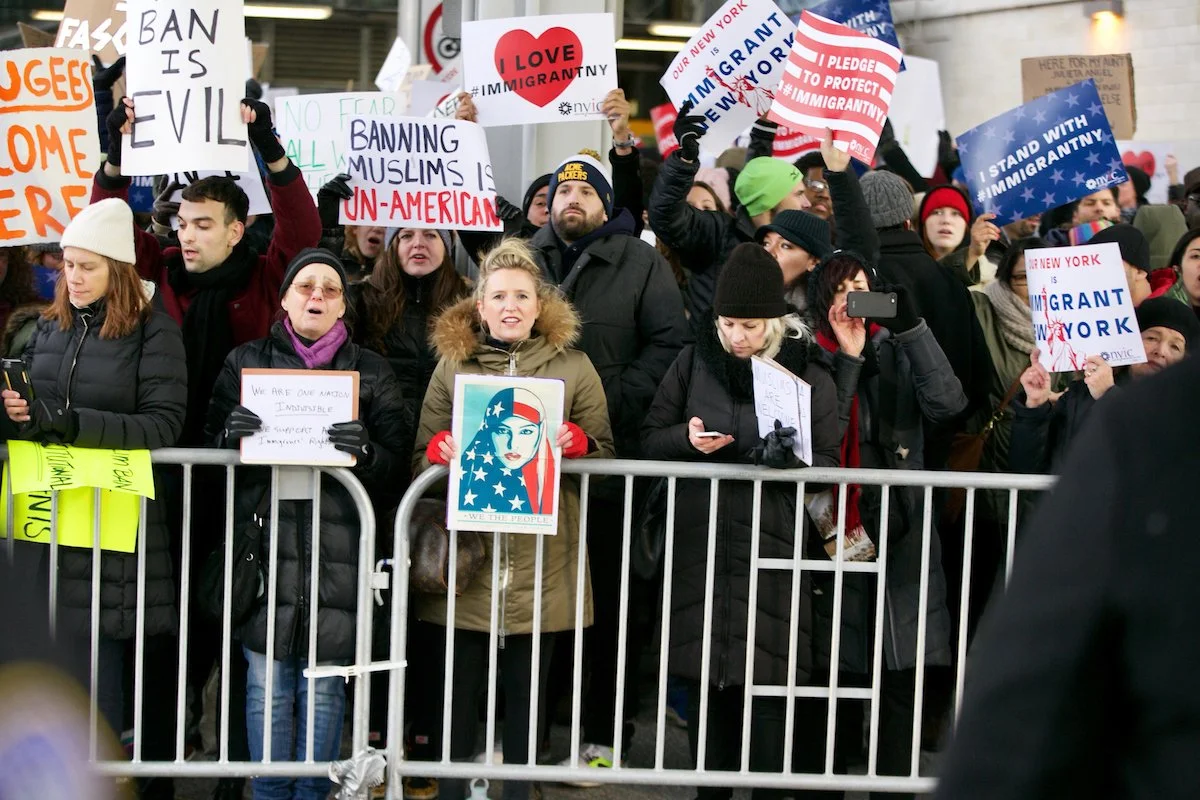
L4GG: Biden’s Border Shutdown Draws From Trump’s Muslim Ban and Threatens Human Lives

L4GG: Biden’s Border Shutdown Draws From Trump’s Muslim Ban and Threatens Human Lives

L4GG denounces the executive order from the Biden administration that aims to effectively shut down the U.S. border to asylum seekers. This measure, which was just announced today on Tuesday, June 4, 2024, draws from the same legal framework as Trump’s notorious Muslim Ban and poses a severe threat to the rights and safety of countless vulnerable individuals.

NEW: Info on Minors’ Access to Abortion in L4GG’s Policy Resource Hub

L4GG is excited to share some important news from L4GG’s reproductive rights and health equity team. In our ongoing commitment to support providers, patients, and advocates navigating the ever-changing reproductive health law landscape, we are pleased to announce a significant expansion of our Policy Resource Hub for Reproductive Health.

Our 'Abortion Laws by State' tracking tool, which provides accurate, reliable, and up-to-date legal research on abortion laws in all 56 U.S. states and territories, now includes detailed information on abortion laws pertaining to minors. Previously, the tool answered critical questions about the legality, exceptions, and requirements for abortion services. Now, with the new section on minors' access, we address additional complexities that providers and advocates face in protecting young individuals' rights.

Here’s an example of what this tool looks like for registered users:

Navigating abortion laws can be challenging, especially with the frequent changes and regional variations. Our Hub, updated daily by over 500 dedicated pro bono attorneys and L4GG’s in-house experts, ensures that you have access to the most current legal information. 

We believe that informed advocates are powerful advocates. By expanding our resources, we aim to equip you with the tools needed to continue the fight for reproductive rights.

We invite you to:

  1. Check Out the Hub: Visit our updated Hub to explore the new section on minors’ access to abortion (accessible via free registration). Share the link with colleagues, friends, and anyone who could benefit from these valuable insights.

  2. Subscribe for Updates: For those who prefer regular updates on reproductive health law changes, subscribe to our Reproductive Health Digest. This bi-weekly newsletter delivers the latest legal analyses on abortion access straight to your inbox.

L4GG: New Proposed Asylum Restrictions Threaten Vulnerable Lives and Undermine Legal Protections

Lawyers for Good Government (L4GG), the nation’s largest community of attorneys committed to human rights and equal justice for all, strongly opposes the Biden administration's latest proposed changes to the U.S. asylum system. These modifications drastically increase the vulnerability of migrants at the U.S.-Mexico border, representing a continuation of restrictive practices that put access to asylum increasingly out of reach.

The new rule proposed by the administration would allow asylum officers, who are not typically lawyers or judges, to determine a person's ineligibility for asylum during preliminary screenings—decisions that could lead to swift deportations without adequate legal representation or a fair hearing. This approach starkly contrasts with previous practices that ensured asylum seekers could argue their cases in a comprehensive manner, safeguarding against wrongful deportations.

"These changes are not just administrative tweaks; they are life-threatening alterations to a system meant to offer refuge to individuals at their most vulnerable moment," said Priscilla Orta, Director of Project Corazon at Lawyers for Good Government. "Denying people their right to a fair process, with adequate time to obtain legal counsel and present critical evidence, is contrary to the principles of justice and humanity that our asylum laws are founded upon."

In conjunction with this rule, which will be finalized after a public comment period that ends June 12, 2024, new internal guidelines and a memo advocating the use of classified evidence in asylum decisions further obscure transparency and due process. This memo permits immigration officers to consider secret evidence against asylum seekers, often without the possibility of rebuttal or even disclosure that such evidence is being used. This practice sets a dangerous precedent, undermining the integrity and fairness of the U.S. legal system.

Project Corazon has witnessed first-hand the dire situations of asylum seekers who have been affected by stringent border policies. Many families and individuals fleeing extreme dangers possess valid asylum claims that are dismissed or overlooked due to rushed and unjust processes.

Lawyers for Good Government calls on the Biden administration to honor its campaign commitments and executive orders by rescinding these harmful measures and instating a fair and humane asylum process. These changes not only jeopardize the lives of those seeking sanctuary but also diminish the United States’ standing as a beacon of hope and safety.

L4GG Celebrates Jaron Goddard as Volunteer of the Month

We are thrilled to announce Jaron Goddard as L4GG’s inaugural Volunteer of the Month! Jaron’s exceptional work as a pro bono volunteer at Wilson Sonsini has significantly advanced our climate justice initiatives. Read on to learn how she has helped support the implementation of clean energy projects all across the United States!


Meet Jaron Goddard

Jaron's journey with Lawyers for Good Government began when she volunteered with our Temporary Protected Status for Ukraine project, where she aided Ukrainian refugees with immigration forms during the Russia-Ukraine war. Her transition to our climate change efforts was driven by her commitment to utilizing the Inflation Reduction Act's “Direct Pay” provision. This new benefit empowers nonprofits, cities, states, and tribal governments to access tax credits for the first time in order to implement clean energy projects. 

L4GG is doing something fascinating regarding direct pay and the Inflation Reduction Act. Direct Pay is this really amazing new tool that the bill authorizes, letting nonprofits, cities, and tribes use the tax code to get incentives for owning their own clean energy. Before the IRA…only private companies could use these really powerful clean energy tax credits. So it’s really innovative and exciting that there gets to be that direct ownership, and L4GG is putting together legal resources to help all of those entities launch [these] first-of-a-kind programs.
— Jaron Goddard, Energy and Climate Solutions, Wilson Sonsini
 

A Look at Jaron’s Achievements

The cornerstone of Jaron’s contributions has been her legal expertise, which has helped nonprofits and local governments implement innovative clean energy projects. These initiatives are not just about environmental impact—they are reshaping economic landscapes by enabling direct ownership and investment in sustainable practices.

Jaron has been instrumental in supporting the US Climate Alliance, providing technical assistance to over half of the state governors’ offices across the country to maximize the benefits of direct pay. Her team’s guidance has been crucial for numerous cities and nonprofits seeking to access clean energy tax credits, unlocking millions of dollars in funding. At Wilson Sonsini, she’s proven to be an invaluable resource, always ready to tackle the most technical questions at a moment’s notice. Beyond her expertise, Jaron is a fantastic thought partner. We regularly discuss the evolving needs in the climate space and strategize on how lawyers can most effectively implement the IRA to make a real difference.
— Jillian Blanchard, L4GG Director of Climate Change & Environmental Justice

Jaron’s Advice to Future Volunteers

Jaron encourages new volunteers to embrace the creativity and pioneering spirit required in this uncharted legal territory of Direct Pay projects. Jaron also said she appreciates L4GG's role in connecting skilled attorneys with impactful projects that might otherwise be out of reach for many community groups and nonprofits.

For the direct pay programs that L4GG works on, what excites me most as a clean energy attorney is that these projects are truly first of their kind—no one has done this before. The IRA has fundamentally changed our industry. It’s an incredible opportunity to think creatively and assist entities in figuring out effective public ownership models. It’s about directly investing public or nonprofit funds into communities, which is really exciting.”
— - Jaron Goddard, Energy and Climate Solutions, Wilson Sonsini

Beyond the Legal World

Outside her professional endeavors, Jaron finds solace and rejuvenation in the natural beauty of the Pacific Northwest. An avid hiker and surfer, she embodies the spirit of the environments she strives to protect through her legal work.


As we celebrate Jaron this month, we highlight her individual contributions and the broader impact of our volunteers who dedicate their expertise to significant causes. Jaron’s work with L4GG exemplifies how dedicated legal professionals can drive systemic change and create a sustainable future. 

  1. If you know of another incredible pro bono volunteer, nominate them for our Pro Bono Volunteer of the Month award here!

  2. If you’re interested, consider how you might also make a difference through your skills and passions!

L4GG Celebrates Critical Tax Change That Increases Public Sector Benefits in the Inflation Reduction Act

Lawyers for Good Government (L4GG), which has been working to expedite the equitable implementation of the Bipartisan Infrastructure Law (BIL) and the Inflation Reduction Act (IRA), celebrates a recent advocacy win that will make millions of dollars in direct pay tax credits available to two-thirds of the country’s cities and counties, school districts, and every single state agency that were previously blocked by conflicting IRS rules. 


The Issue:

In 2023, many public sector entities completed clean energy projects (such as buying electric school buses or EVs or constructing rooftop solar) with the expectation of reimbursement through the IRA’s Elective Pay Program, also known as ‘Direct Pay’. Direct Pay gives public sector entities and other tax-exempts the ability, for the first time, to receive a direct payment equal to the full value of tax credits for completing qualifying clean energy projects. Unfortunately, Treasury’s previous guidance, which seemed to contradict the text and intent of the IRA, deemed hundreds of early 2023 projects ineligible based solely on the fact that the applicant’s fiscal years do not match a calendar year.

Treasury’s previous guidance made these projects ineligible for direct pay, which can provide reimbursement of 30-70% of project costs.

This would have meant the loss of millions of dollars in projected revenue for small cities and school districts that were counting on these funds, not to mention every single state agency that placed a clean energy project in early 2023.

The issue impacted approximately two-thirds of all cities and counties, every single state, and many school districts, universities, and nonprofits with eligible 2023 projects that all have Fiscal Years that do not match the calendar year. L4GG had identified hundreds of projects at the state and local level whose Elective Pay credits were at risk as a result of this issue.


The Advocacy:

L4GG led advocacy efforts over the past few months to change the policy, including multiple meetings and sending a letter to the White House, documenting the issue and a proposed solution, in partnership with the Government Finance Officers Association (GFOA) and signed by 48 entities, including 18 cities and counties from 13 states. As a result of L4GG’s initial advocacy, the IRS first issued its Final Rule on March 5, 2024, where it allowed entities to file for Direct Pay on a calendar year to capture all 2023 projects. While this Final Rule enables all entities with 2023 projects to file for Direct Pay, therefore fixing the issue potentially blocking them from receiving tax credits for climate projects, it unfortunately did not provide guidance on how entities whose fiscal years do not align with their calendar year could subsequently realign their tax filings with the entity's pre-existing non-calendar fiscal year. As a result, entities would have had to maintain two sets of accounting records for the next 10 years! L4GG spoke to a number of cities and state agencies who, when notified of the provisions in the Final Rule, decided not to pursue tax credits for their early 2023 projects, simply because the administrative burden of maintaining separate accounting records was too high.


The Policy Change:

Given the input from our clients, L4GG continued informal advocacy via discussions with the White House to ensure new guidance was issued to clarify that fiscal year realignment was available to entities for future calendar years. As a result of our efforts, the IRS issued new guidance on Friday, April 19, 2024 that explicitly confirms that entities will be able to realign future filings in 2024 filings with their fiscal year. 

The new guidance, coupled with the Final Rule, commits the IRS to reducing administrative burden on entities, confirming that they will not have to maintain two sets of books for the duration of their Elective Pay filings. The guidance gives them assurance that multiple sets of books is temporary, and reduces their burden going forward. L4GG applauds the action of the IRS to ensure that hundreds of public entities will have access to critical funding for clean energy projects and will rely on Direct Pay in future years.

By removing this early barrier to collecting earned IRA tax credits, risk-averse states and local actors will now feel more comfortable relying on Elective Pay to finance clean energy projects in the future. These changes will have a huge impact on the early success of the IRA uptake process and will help support the successful rollout of this revolutionary new program.
— Jillian Blanchard, L4GG’s Director of Climate Change and Environmental Justice

Emergency Medicine on Trial at Supreme Court: 4/24

L4GG Experts Provide Case Overview + Debrief Call for Landmark SCOTUS Case on Emergency Abortions


A Landmark Case

On April 24, the U.S. Supreme Court will hear oral arguments in Idaho v. United States, a historic post-Dobbs case that will determine the scope of the federal Emergency Medical Treatment and Labor Act (EMTALA) in the face of state abortion bans.

Idaho’s abortion ban criminalizes the delivery of abortion services except where necessary to save the life of the pregnant person, remove an ectopic pregnancy or in very limited cases of reported rape or incest, making no exception for those cases where the abortion is necessary to protect the patient’s health. However, for forty years, EMTALA has required Medicare-recipient emergency rooms to provide stabilizing care to any patient who needs it to preserve their life or health. Idaho argues that they are able to enforce their more restrictive ban over federal EMTALA obligations. 

This case is not only critical for access to reproductive healthcare, but also tests whether a state can unilaterally override federal regulations that protect the right of every person to access emergency medicine. It leaves medical professionals with an impossible choice: either violate Idaho’s law, risking criminal prosecution and loss of their professional license, or violate EMTALA and face federal enforcement and civil sanctions.

The ramifications of this case are immense, potentially influencing not only abortion access but also the broader spectrum of emergency medical care under federal law. If a state can “carve out” abortion from federally mandated services, it threatens access to a range of highly politicized medical care, from AIDS-related emergencies to treatment of high-cost chronic or mental health conditions.

Our debrief will provide insight into the legal and ethical dimensions of this crucial public health issue.


Understanding the Case: A Special L4GG Explainer

To navigate the complexities of this case and its potential impact, L4GG has crafted an accessible case overview and listening guide. This guide offers a clear understanding of the issues at stake, the opposing arguments, and the significance of this Supreme Court case for emergency medicine and reproductive health rights in the U.S.


Join Us for a Deeper Dive: L4GG’s Same-Day Analysis Call

Later that same day, at 4 PM ET, join our staff experts in a same-day analysis call to unpack the oral arguments and discuss their implications for healthcare providers and patients alike. Our Supervising Attorney for Civil Rights, Khadijah Silver, JD/MPH, and Staff Attorney for Reproductive Justice, Alyssa Morrison, JD, will highlight the key issues and what they mean for emergency medical care across the United States.

This debrief call will illuminate the critical aspects of Idaho v. U.S. and galvanize attendees to protect our fundamental right to health and reproductive autonomy.


Why You Should Attend

The implications of this Supreme Court case will touch on the very core of reproductive rights and emergency medicine access in the United States. Whether you're a legal expert, a reproductive rights advocate, or simply someone who cares deeply about the right to health, our analysis event and listening guide will equip you with the knowledge you need to understand the outcomes of this historic case. We hope you'll join us on 4/24 at 4 pm and stand united with us for reproductive rights!