
L4GG Official Statements

L4GG Condemns EPA’s Final Repeal of the Endangerment Finding

WASHINGTON — Following today’s final action by the Environmental Protection Agency repealing the 2009 endangerment finding, Jillian Blanchard, Vice President of Climate Change & Environmental Justice at Lawyers for Good Government (L4GG), issued the following statement:

“By finalizing the repeal of the endangerment finding, the EPA has formally declared its loyalty to polluters over people. This decision rips out the scientific and legal foundation that has protected Americans from dangerous climate pollution for more than a decade, and it does so by ignoring decades of peer-reviewed science, sidelining expert consensus, and fast-tracking a change with enormous consequences for public health. 

“Section 202(a)(1) of the Clean Air Act (42 U.S.C. § 7521(a)(1)) clearly states that the EPA Administrator must regulate any air pollutant that can “cause, or contribute to, air pollution which may reasonably be anticipated to endanger public health or welfare.” Courts have been clear for years: the Clean Air Act requires EPA to follow the science and regulate climate pollution that endangers human health and welfare. This rule violates both the law and reality, and it will be challenged accordingly.  “Greenhouse gases don’t stop endangering people because an administration says they don’t. Heat waves, floods, wildfires, and toxic air will continue to harm communities whether EPA acknowledges the science or not.

“What makes this move especially egregious is the process itself. EPA rushed this rule through on an artificially short timeline, relied on discredited pseudoscience from a politicized ‘Climate Working Group,’ and dismissed thousands of public comments, claiming any related to climate science  were ‘out of scope.’ That is the definition of arbitrary and capricious decision-making and a failure to observe due process. 

“Communities, states, and advocates, including Lawyers for God Government, will continue to call for administrative reconsideration and push back against this repeal in the courts. This fight is far from over.”

Ryan Hathaway, L4GG’s Director of Environment and Climate Justice and former Director for Environmental Justice under Biden, added the following:

“The EPA can’t just erase the endangerment finding with the stroke of a pen. By 2009, the science was unequivocal: greenhouse gases endanger public health. The Endangerment finding wasn’t political; it was the culmination of decades of measurement, modeling, and global consensus. To reverse it now would not only ignore overwhelming scientific evidence, but unravel one of the rare moments where policy caught up to facts. It would be like deciding, years after seatbelts saved millions of lives, that maybe we never needed them. It’s reckless, ignorant, irresponsible, and will hurt people. We are not going to stand for it.”

If you’d like to connect with Jillian or Ryan to discuss the legal and environmental stakes of this unprecedented rollback, and why courts are likely to view this proposal as unlawful, we’d be happy to arrange an interview.

# # #

Lawyers for Good Government (L4GG) is a nonprofit organization that harnesses the power of 125,000 lawyers, law students, and advocates in the fight for justice. We identify where lawyers can make the greatest impact and mobilize them to defend democracy and the rule of law, protect civil and human rights, and advance environmental justice through coordinated legal action and advocacy efforts that create meaningful change for all Americans.


L4GG Files Amicus Brief in Appeal Defending $20 Billion Clean Energy Fund From Trump Administration Power Grab

WASHINGTON — Today, Lawyers for Good Government (L4GG) filed an amicus brief as counsel for 40 U.S. Senators and U.S. Representatives, in the appeal of Climate United Fund v. Citibank, N.A. over the Trump administration’s cancellation of the Greenhouse Gas Reduction Fund (GGRF).

The filing responds to the Trump administration’s appeal of a district court ruling that blocked EPA’s attempt to dismantle the program and reclaim funds already awarded. The brief argues that the Environmental Protection Agency’s termination of $20 billion in Congressionally mandated clean energy grants, and attempt to claw back already-disbursed funds, is unconstitutional and sets a dangerous precedent.

“Congress created, funded, and directed EPA to deliver this money to build clean energy projects that cut pollution and lower energy bills,” said Jillian Blanchard, Vice President of Climate Change & Environmental Justice at L4GG. “EPA cannot simply undo the law by executive fiat. That’s a violation of the Constitution’s separation of powers.”

The brief, which you can read in full here, argues:

  • Congress has the exclusive “power of the purse.” Under the Appropriations and Spending Clauses, only Congress decides how federal funds are allocated.

  • EPA’s termination was a power grab. By nullifying programs after money had already been awarded and transferred, the administration usurped Congress’s authority.

  • The administration’s appeal asks the Court to rewrite precedent. By leaning on a misreading of Dalton v. Specter, the administration ignores clear Supreme Court rulings (Train v. New York, Clinton v. New York) that prohibit the executive branch from refusing to spend funds Congress appropriated.

  • If allowed to stand, the ruling creates a de facto line-item veto. Any future administration could cancel duly authorized programs and seize funds Congress already appropriated, undermining democracy and destabilizing community investments.

“This is not a routine contract dispute—it is a constitutional power grab,” said Gary DiBianco, counsel at L4GG’s Pro Bono Litigation Corps. “If the executive can claw back billions that Congress has already spent, then the courts and the executive have stripped all meaning from Congress’s power of the purse.”

The GGRF was created by the Inflation Reduction Act to invest nearly $20 billion in projects that reduce pollution, lower energy costs, and build resilience in disadvantaged communities. Hundreds of organizations have already begun planning and hiring around these funds, which are now in jeopardy. 

If you’re interested in learning more about some of those communities and projects impacted, we’d be happy to potentially arrange interviews.

# # #


Lawyers for Good Government (L4GG) is a nonprofit organization that harnesses the power of 125,000 lawyers, law students, and advocates in the fight for justice. We identify where lawyers can make the greatest impact and mobilize them to defend democracy and the rule of law, protect civil and human rights, and advance environmental justice through coordinated legal action and advocacy efforts that create meaningful change for all Americans.

L4GG Announces Winners of the “Rights in Reel Time Challenge” for Law Students

L4GG Announces Winners of the “Rights in Reel Time Challenge” for Law Students

Lawyers for Good Government (L4GG), in partnership with Tidal Water Consulting, today announced the winners of the inaugural Rights in Reel Time Challenge, a national competition inviting law students to translate constitutional rights into compelling short-form videos for the public.

After a blind review process conducted by a distinguished panel of legal experts, journalists, and educators, cash prizes of $3,000 (First Place), $1,250 (Second Place), and $750 (Third Place) were awarded to three student submissions selected for excellence in constitutional grounding, legal accuracy, clarity, and creativity. 

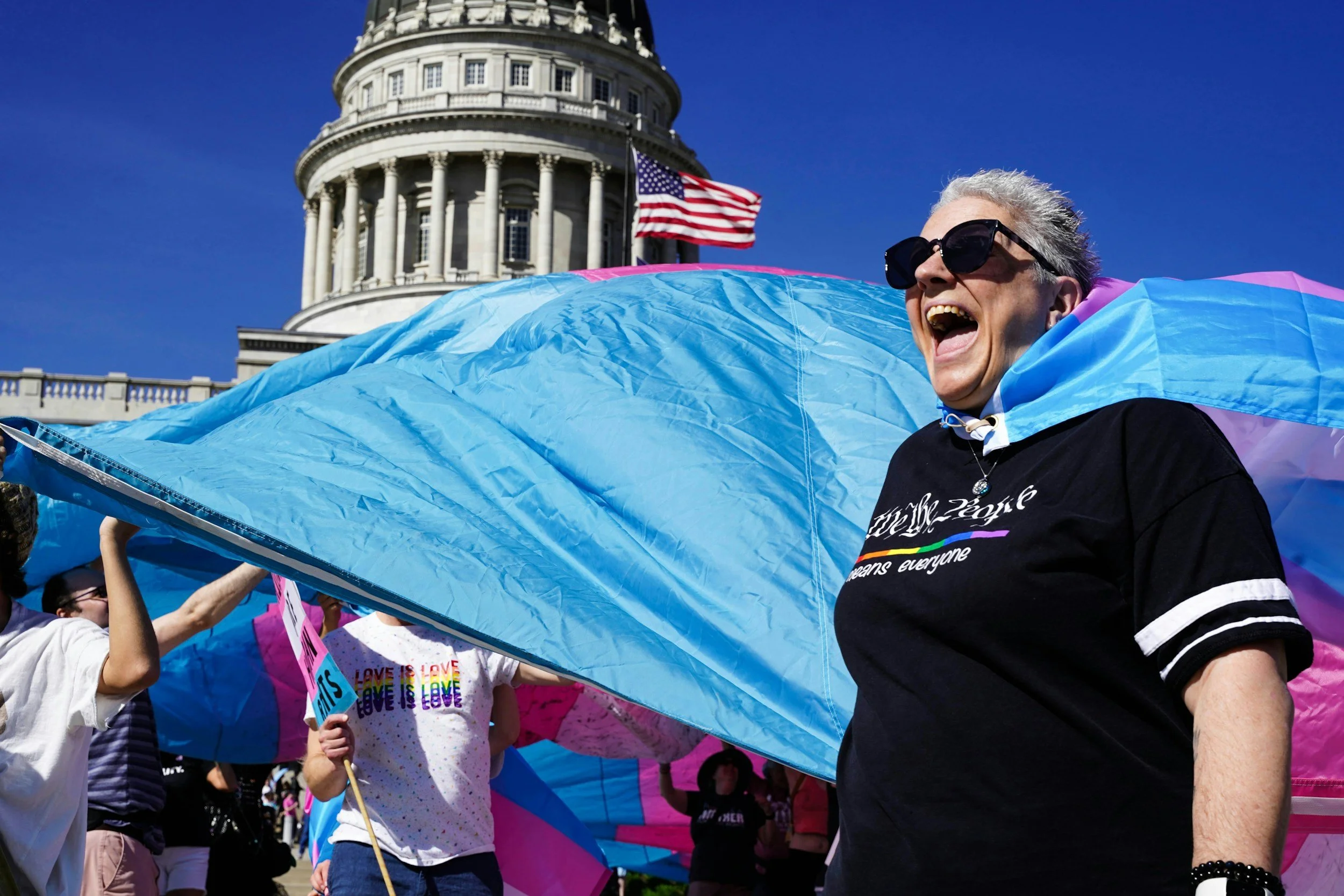
Medical Records of Over 3,000 Transgender Youth Protected from Overreaching Federal Subpoena After Legal Challenge

Medical Records of Over 3,000 Transgender Youth Protected from Overreaching Federal Subpoena After Legal Challenge

DOJ Settlement Marks Unprecedented Win for Health Privacy and Constitutional Rights

January 23, 2026, Washington, D.C.— The Department of Justice has withdrawn its subpoena demanding the medical records of over 3,000 transgender youth at Children's Hospital Los Angeles and entered into a settlement agreement with a group of patients and their families, represented by Lawyers for Good Government (L4GG), Western Center on Law and Poverty, and Impact Fund.

The subpoena, served this summer to Children's Hospital Los Angeles, sought sweeping access to minors' most sensitive medical records—including mental health treatment notes,  prescribing information, and other deeply personal details—related to gender-affirming care. L4GG and co-counsel filed a motion to quash the subpoena on behalf of a putative class of affected patients and families in federal court in the Central District of California, arguing it violated patients' constitutional right to privacy and exceeded the government's legal authority.

This is a massive victory for every family that refused to be intimidated into backing down. The government’s attempt to rifle through children’s medical records was unconstitutional from the start. Today’s settlement affirms what we’ve said all along: these families have done nothing wrong, and their children’s privacy deserves protection.
— Khadijah Silver, Director of Gender Justice & Health Equity at Lawyers for Good Government


This settlement is a crucial affirmation that health care decisions belong in exam rooms, not government subpoenas. Youth, families, and medical providers have constitutional rights to privacy and dignity. No one’s private health records should be turned into political ammunition—especially children. This ruling protects sensitive medical records, upholds the professional integrity of providers, and reinforces that families seeking lawful care are not suspects—they’re entitled to safety and confidentiality.
— Cori Racela, Executive Director for Western Center on Law & Poverty

The settlement agreement protects the anonymity of the affected youth and families while securing the withdrawal of the government's demands for their medical records — and those of their fellow patients.

We are so proud to represent our clients who stepped up to protect their families and thousands of others by being plaintiffs in this lawsuit. Their bravery helps protect all of us from unlawful and discriminatory government intrusion into private health care decisions between patients, families, and doctors.
— Lori Rifkin, Litigation Director at Impact Fund

Gender-affirming care remains legal in many states and is endorsed by every major medical association, including the American Medical Association, the American Academy of Pediatrics, and the Endocrine Society. The investigation's underlying premise—that lawful medical treatment becomes fraudulent based solely on the identity of the patient receiving it—has been widely rejected by legal experts and medical professionals.

Parents who follow medical advice and seek evidence-based treatment for their children should never be subjected to government harassment. This settlement sends a clear message: constitutional rights matter, and families seeking legal medical care for their children are entitled to privacy and dignity.
— Amy Powell, Litigation Director at Lawyers for Good Government

L4GG Files Amicus Brief Supporting Youth Climate Plaintiffs in Ninth Circuit Appeal

WASHINGTON — Yesterday, Lawyers for Good Government (L4GG) filed an amicus brief in support of youth plaintiffs represented by Our Children’s Trust in Lighthister, et al. v. Trump, et al., a case before the U.S. Court of Appeals for the Ninth Circuit appealing the dismissal of claims challenging federal executive actions designed to expand fossil fuel use.

The brief urges the Ninth Circuit to reverse the district court’s ruling, which held that despite “overwhelming” evidence that the Plaintiffs are suffering tangible injury caused by the implementation of the challenged laws, the harm was not redressable by the courts. L4GG argues that this conclusion misapplies binding precedent and, if allowed to stand, would severely weaken the judiciary’s role in protecting fundamental rights.

The brief, which you can read in full here, argues that federal courts have both the authority and the obligation to declare unconstitutional executive actions invalid—particularly where those actions are the legal cause of ongoing harm to young people’s health, safety, and lives.

Specifically, the brief explains:

  • Declaratory relief is meaningful redress. Longstanding Supreme Court precedent—including Brown v. Board of Education—establishes that invalidating an unconstitutional legal mandate itself constitutes redress, even where full compliance may take time or face resistance.

  • The district court misread Juliana v. United States. Unlike Juliana, where plaintiffs sought a court-designed national climate plan, the youth plaintiffs here seek a narrow, traditional remedy: a declaration that specific executive orders are unconstitutional and ultra vires.

  • Courts are not powerless simply because a remedy is incomplete. Article III does not require courts to solve a policy problem in full—only to eliminate the legal cause of a constitutional injury. Declaring the challenged executive orders invalid would withdraw their legal force and reduce the harms they are causing.

  • Denying redressability here would undermine the rule of law. If courts may not invalidate unconstitutional executive mandates simply because they do not control every downstream effect, entire categories of constitutional claims would become nonjusticeable.

“Federal courts do not lose their constitutional role simply because a case involves climate change or executive policy,” said Charles Dell’Ario, counsel for amicus, and pro bono volunteer for Lawyers for Good Government. “When an executive order is the legal cause of constitutional injury, courts have both the power and the duty to say what the law is and to withdraw that mandate from the legal system.”

"When courts find that the administration has caused a constitutional injury—as the court did here—the government cannot evade liability by arguing that there is nothing a court can do about it,” added Amy Powell, Litigation Director, Pro Bono Litigation Corps, Lawyers for Good Government. “Rather, a declaratory judgment invalidating the challenged executive actions is real relief with real meaning. The rule of law requires no less."

If you’d be interested in discussing the case and this brief further, we’d be happy to connect you to one of our spokespeople at L4GG’s Pro Bono Litigation Corps, for any comment.

# # #

Lawyers for Good Government (L4GG) is a nonprofit organization that harnesses the power of 125,000 lawyers, law students, and advocates in the fight for justice. We identify where lawyers can make the greatest impact and mobilize them to defend democracy and the rule of law, protect civil and human rights, and advance environmental justice through coordinated legal action and advocacy efforts that create meaningful change for all Americans.

Five Years After January 6: We Are Still Defending Democracy—and We Are Not Backing Down

Five Years After January 6: We Are Still Defending Democracy—and We Are Not Backing Down

Five years after January 6, the threat to our democracy has only deepened. What began as an authoritarian attempt to overturn an election has evolved into sustained attacks on the rule of law, the independence of our institutions, and the separation of powers meant to protect us all. Accountability for January 6 was never fully realized, and in some cases has been actively dismantled. At Lawyers for Good Government, we are building the legal firewalls this moment demands—mobilizing the legal community to defend democratic institutions, protect vulnerable communities, and hold power accountable. We are still here. We are still organizing. And we are not backing down.

L4GG Responds to D.C. Circuit Granting En Banc Review in Green Bank Litigation

WASHINGTON — Jillian Blanchard, Vice President of Climate Change & Environmental Justice at Lawyers for Good Government (L4GG), issued the following statement in response to the U.S. Court of Appeals for the D.C. Circuit granting en banc review in litigation challenging the termination of the Greenhouse Gas Reduction Fund (GGRF), a $20 billion Congressionally authorized clean energy and climate resilience program:

“The D.C. Circuit’s decision to grant en banc review is a major inflection point in the fight for affordable energy, climate resilience, and the rule of law. For months, the administration has tried to dismiss these funds as waste while families across the country are paying record electricity bills and struggling to keep the lights on. 

“The Greenhouse Gas Reduction Fund was designed to deliver cheaper, homegrown energy, backup power, and real resilience where it’s needed most — lowering costs for everyday people and strengthening communities before disaster strikes. This funding was built to keep energy bills down for Americans who are already stretched thin and to build critical markets to support these projects.

“Full-court review is relatively rare, and the fact that the court expressly cited L4GG’s amicus brief on behalf of 40 Members of Congress underscores how serious the constitutional and statutory issues are here. Nearly $20 billion lawfully appropriated by Congress is at stake, and this case will determine whether an administration can simply override Congress’s spending decisions by fiat, eroding a basic principle of our democracy.”

# # #

Lawyers for Good Government (L4GG) coordinates large-scale pro bono programs and issue advocacy efforts to protect human rights, defend the environment, and ensure equal justice under the law, and has a network of 125,000+ lawyers to assist in its efforts. lawyersforgoodgovernment.org.

Lawyers for Good Government Launches ‘Rights in Reel Time Challenge,’ a New National Competition Bringing Constitutional Rights to Life Through Video Storytelling

Lawyers for Good Government Launches ‘Rights in Reel Time Challenge,’ a New National Competition Bringing Constitutional Rights to Life Through Video Storytelling

Lawyers for Good Government (L4GG), in partnership with Tidal Water Consulting, today announced the launch of the Rights in Reel Time Challenge, a new national competition inviting law students to explain core constitutional rights through short, compelling videos.

L4GG Files Amicus Brief Documenting the Routine Use of Independent Commissions During the Founding of the Republic

L4GG Files Amicus Brief Documenting the Routine Use of Independent Commissions During the Founding of the Republic

As counsel to amici Professor Victoria Nourse and Lawyers Defending American Democracy, Lawyers for Good Government (L4GG) filed an amicus brief in Donald J. Trump, et al. v. Rebecca Kelly Slaughter, et al., a case before the U.S. Supreme Court challenging the constitutionality of the Federal Trade Commission’s structure and threatening the future of independent federal agencies across government. 

Nonprofits, Tribes, and Local Governments Appeal Ruling Allowing EPA to Terminate Environmental Justice Grants

Plaintiffs ask D.C. Circuit to restore congressionally mandated funds; without relief, 350+ pollution-reduction and climate-resilience projects remain frozen

WASHINGTON — A coalition of nonprofits, Tribes, and local governments today filed an appeal in the U.S. Court of Appeals for the D.C. Circuit, challenging the lower court ruling that suggests the District Court does not have jurisdiction to hear claims related to EPA’s termination of the Congressionally-mandated Environment and Climate Justice (ECJ) Block Grant program, which Congress mandated to fund local projects addressing pollution, flooding, and climate resilience.

The plaintiffs—represented by Earthjustice, the Southern Environmental Law Center (SELC), the Public Rights Project, and Lawyers for Good Government (L4GG)—seek to restore $3 billion in Congressionally authorized funding that has been unlawfully terminated for more than 350+ grantees.

VIEW THE FILING HERE 

Across the country, hundreds of local projects remain stalled, including critical infrastructure work in the Native Village of Kipnuk, Alaska, where recent catastrophic flooding washed away homes and infrastructure that were set to be protected under an EPA-funded riverbank stabilization project. Kipnuk is now facing another winter without housing or protection, and has had to start a Go Fund Me page to pay for emergency services. And, they are far from alone. With hurricane season underway, communities in every region—in particular, the Southeast—remain more vulnerable to storms, flooding, and pollution because this funding was taken away.

“We’re already seeing the human toll of EPA’s unlawful decision in these flood-ravaged Alaskan villages, which could have had $20M available for emergency riverbank stabilization work if the EPA hadn’t terminated the Kipnuk grant in May of this year. This is the result of an Administration prioritizing tax breaks for billionaires at the cost of human lives and critical infrastructure,” said Jillian Blanchard, Vice President of Climate Change & Environmental Justice at Lawyers for Good Government.
“Inevitably, we will see more tragedies in coastal towns as hurricane season approaches that could have been mitigated.  Resilience hubs in Louisiana will not be built, and as more natural disasters strike due to the heartless rescission of these grants, we’re likely to see more and more avoidable tragedies. The Administration’s choice to strip away these lifelines endangers lives, undermines the law, and abandons the very communities Congress promised to protect. If you consider these terminations with the significant reduction in disaster-relief FEMA funding, we’re staring down the barrel of a climate catastrophe waiting to happen. We’re appealing because the stakes couldn’t be higher.”

If successful, the appeal would reinstate the ECJ grants, allowing more than 350 communities and Tribal governments to resume critical projects—ranging from flood prevention to community resilience  hubs—before more preventable destruction occurs.

# # #

Lawyers for Good Government (L4GG) is a nonprofit organization that harnesses the power of 125,000 lawyers, law students, and advocates in the fight for justice. We identify where lawyers can make the greatest impact and mobilize them to defend democracy and the rule of law, protect civil and human rights, and advance environmental justice through coordinated legal action and advocacy efforts that create meaningful change for all Americans.