
How Attorneys Can Help Combat Pregnancy Criminalization

Written by Zane McNeill, Civil Rights & Health Equity Legal Fellow 

A South Carolina bill that would have created one of the nation’s most extreme abortion bans has failed to advance in the state Senate. If passed, the bill would have outlawed nearly all abortion care, removed exceptions for rape, incest, and fatal fetal anomalies, and imposed prison sentences of up to 30 years on anyone who obtains or assists with an abortion, including the pregnant person. Although abortion-rights advocates rightfully celebrated the blocking of SB 323, legal scholars point out that pregnant people in the state already face scrutiny and even criminalization for pregnancy loss, despite the fact that abortion itself is not formally criminalized. “[W]e know that the people of South Carolina have long been subjected to criminalization related to their pregnancy or pregnancy outcome,” the National Women’s Law Center (NWLC) wrote in its written testimony opposing SB 323.

In fact, just before the bill’s hearing, a 20-year-old woman was charged with attempted murder for allegedly attempting to terminate her pregnancy. Her arrest is just the most recent incident in the long history of South Carolina engaging in pregnancy criminalization, a term for when a pregnant person is arrested for pregnancy-related reasons, or has bail, sentencing, or probation conditions made stricter because they become pregnant after being charged with an unrelated offense. The state was an early adopter of policies prosecuting people who tested positive for drugs while seeking prenatal care or giving birth, a practice that disproportionately targets Black women. Additionally, well before the U.S. Supreme Court overturned Roe v. Wade in 2022, more than 100 women in South Carolina had already faced criminal charges related to conduct during pregnancy or their pregnancy outcomes. 

While South Carolina currently ranks as the third most aggressive state in prosecuting pregnant people, with prosecutors initiating 62 cases in the state from 2022-2024, pregnancy criminalization is an issue nationwide. According to the reproductive advocacy group Pregnancy Justice, in the first two years after Dobbs, prosecutors in 16 states brought at least 412 cases against pregnant people for actions connected to pregnancy, pregnancy loss, or childbirth. 

After the Supreme Court overturned the constitutional right to an abortion in 2022, scholars and advocates warned that police might use period-tracking apps and other digital tools to surveil and criminalize pregnant people. While this certainly remains a concern, research shows that arrests and prosecutions usually start with tips from people the pregnant person trusts—family members, friends, social workers, or healthcare providers. 

In fact, 39% of cases involving investigations or arrests for self-managed abortions, or assisting someone with one, were initiated by healthcare provider reports. The American College of Obstetricians and Gynecologists (ACOG) strongly opposes pregnancy criminalization and has released a statement reminding clinicians that they “have an obligation to both understand the legal environment in which they practice and how laws in various states affect care and to protect patient autonomy and confidentiality and the integrity of the patient-clinician relationship.”

Many such incidents stem from misunderstandings about mandatory reporting requirements and how reporting may violate state and federal privacy laws that are designed to protect patient autonomy, confidentiality, and the integrity of the patient–clinician relationship. Thus, ACOG has called on “[p]rofessional and legal advocacy organizations [to] work to make resources available to health care professionals to help them navigate these complexities.”

While the delay of SB 323 offers only temporary relief and does not erase South Carolina’s history of criminalizing pregnancy, legal advocacy groups are meeting this call by working to push back against the broader national trend of punishing pregnancy. At Lawyers for Good Government, we support providers by publishing a biweekly reproductive-news digest and update a hub with every state’s abortion laws daily. We also work with healthcare systems to help them better understand how to provide care in restrictive states while still staying legally safe. Individual attorneys also have a role to play in combating pregnancy criminalization–prosecutors can refuse to misuse criminal statutes to prosecute pregnancy loss, defense attorneys can defend clients against cases of pregnancy criminalization, and every lawyer can volunteer their time and expertise to safeguard reproductive freedom. 

FEMA Whistleblowers Reinstated

FEMA retaliated against employees who signed a letter of dissent, the Katrina Declaration;  after whistleblower complaints were filed, the reprisals ended 

WASHINGTON—Today, Federal Emergency Management Agency (FEMA) employees who  were illegally terminated or placed on administrative leave for exercising their First  Amendment and whistleblower rights returned to work. On August 25, 2025, the  employees sent a dissent letter to Congress -- The FEMA Katrina Declaration -- protesting  gross waste and mismanagement, abuses of authority, dangers to public health and  safety, and violations of laws, rules and regulations by Agency management.  

The next day, the Department of Homeland Security (DHS) put the public signers on  indefinite administrative leave, ordered them to cease all work and not contact anyone at  FEMA and DHS. FEMA’s Office of Professional Responsibility then began retaliatory  investigations of the public signers. The employees acknowledged they had in fact signed  the Declaration following which the Agency terminated an employee on the sole charge  that signing the declaration was “Conduct Unbecoming a Federal Employee.” According to  the Specification supporting the charge, the Declaration: 

[I]ncluded multiple disparaging comments and allegations directed at the Federal  Emergency Management Agency, the Department of Homeland Security, the  current Administration, and its members, which undermined the Agency’s goals  and mission. 

During this time, the public signers filed whistleblower complaints with the U.S. Office of  Special Counsel (OSC). They were assisted by Government Accountability Project, in  partnership with Lawyers for Good Government (L4GG) and Stand Up for Science (SUFS),  and pro bono counsel Brandy Mai (brandy@bmailawyer.com), Andrew D. Rotstein  (andrew.d.rotstein@gmail.com) and Joshua R. Cohen and Ellen R. Kramer  (jcohen@crklaw.com). 

Today, the employees returned to work after FEMA ceased retaliating. According to FEMA  management:

Although the [Report oof Investigation] substantiated the employee’s involvement  with the so-called Katrina Declaration, FEMA’s legal counsel has advised that the  employee’s actions are protected under the Whistleblower Protection Act (5 U.S.C.  § 2302(b)(8)) and the First Amendment of the U.S. Constitution. These protections  ensure that employees can disclose information related to misconduct, abuse, or  violations of law without fear of retaliation, provided the disclosure is made in good  faith and aligns with statutory protections. As a result, my recommendation is that  this matter be closed with no disciplinary action

David Z. Seide, Senior Counsel at Government Accountability Project, said: 

FEMA did the right thing. This case is important precedent. It reaffirms what should  be obvious: it is unlawful to retaliate against federal employees who exercise their  free speech and whistleblower rights by publicly dissenting against agency policies,  especially those that place lives in danger. 

Amy Powell, Litigation Director of Lawyers for Good Government, said: 

Lawyers for Good Government and our volunteers are proud to stand with the FEMA  whistleblowers. All of our clients who were placed on administrative leave have now  been fully reinstated, but reinstatement is just the first step. These public servants  fulfilled their legal and moral obligation by exposing serious threats to public safety,  and future whistleblowers deserve protection, not punishment. We urge both FEMA  and Congress to take their warnings seriously and begin the critical work of reform,  ensuring accountability for the failures they exposed. 

Colette Delawalla, Founder and Executive Director of Stand Up for Science, said: 

Our team at Stand Up for Science is pleased to see all Katrina Declaration signers  reinstated. We are proud of these public servants for speaking up and continue to  rally behind all who desire to use their First Amendment rights and whistleblower protections to call attention to the harms this Administration’s policies are causing  for the American public.

We share the following statement from the Katrina  Declaration Signers:  

We’re thrilled that our coworkers have been reinstated and are back to  serving the American people. These actions reaffirm what we’ve said all  along: these employees did nothing wrong. Their retaliation was part of a  broader pattern that also targeted employees at the Environmental Protection Agency, the Department of Housing and Urban Development, The United States Department of Agriculture and the National Institutes of  Health. We call for every one of those workers be reinstated immediately. 

The retaliation was a wasteful and costly political stunt, and the concerns we  raised in the Katrina Declaration remain unresolved. Programs are still  stalled, funding remains frozen, and our ability to respond to disasters  continues to be weakened. As we work toward real solutions, it’s critical that  leaders listen to the people who know this work best, the experts and  professionals who understand what it takes to build a stronger FEMA. We  urge Congress to advance the FEMA Act now so the agency can restore stability, uphold its legal obligations, and protect communities effectively.  The work ahead is significant, and we will continue to stand up and speak out  for disaster survivors everywhere. 

L4GG Launches Court of Federal Claims Clinic to Support Organizations Harmed by Unlawful EPA Grant Terminations

WASHINGTONLawyers for Good Government (L4GG) today announced the launch of a new Court of Federal Claims (COFC) Clinic designed to support nonprofits, Tribes, local governments, and community organizations whose environmental and climate justice grants were unlawfully terminated by federal agencies this year. The Clinic is launching in partnership with the Environmental Protection Network (EPN), to help onboard grantees seeking assistance.

While grantees’ continue to assert constitutional claims that would restore funding nationwide, hundreds of communities have been left in limbo. Recent court decisions have pushed grantees toward the slower, more burdensome Court of Federal Claims, where each organization must file individually, secure legal counsel, and shoulder costs that many cannot afford.

“This entire process is designed to make people walk away, but L4GG’s Court of Federal Claims Clinic aims to stop this strategy of divide and exhaust from succeeding. If the government breaks a binding grant agreement, the law still provides a remedy, and we are here to help grantees pursue it.”

”Forcing hundreds of under-resourced organizations into one-by-one lawsuits is not justice. These communities were promised and constitutionally obligated funding by Congress to protect themselves from pollution, storms, and public health threats. Our clinic ensures they won’t be abandoned or bullied into submission just because the administration wants these programs to disappear.”
— Jillian Blanchard, Vice President of Climate Change & Environmental Justice at L4GG.

The COFC Clinic offers two forms of  support:

  • Remote Pro Bono Clinic: L4GG and volunteer attorneys will help terminated grantees prepare their claims for filing, including reviewing documents, assessing damages, developing legal strategy, and drafting complaints.

  • Coordinated Pro Bono/Low Bono Representation in COFC: L4GG will match grantees with trained attorneys prepared to litigate COFC cases, ensuring organizations receive high-quality representation without draining limited budgets already strained by termination of their grants.

Under the administration’s approach, grantees cannot seek reinstatement of their programs in the Court of Federal Claims. COFC provides monetary damages only, creating an enormous barrier to justice, forcing communities to absorb the cost and time to litigate individually, and pressuring smaller organizations to give up entirely. L4GG’s COFC Clinic ensures they have the tools, representation, and support needed to fight back. 

Hundreds of organizations across the country continue to confront flooding, wildfire risk, toxic air pollution, failing infrastructure, and rising energy costs—problems their grants were designed to address. Many have already experienced direct harm, including layoffs, lost contracts, stalled community projects, and worsening climate impacts.

If you are interested in learning more about L4GG’s COFC Clinic, or potentially talking with any of the more than 50 communities that have already signed up for assistance, we’d be happy to help arrange an interview.

# # #


Lawyers for Good Government (L4GG) is a nonprofit organization that harnesses the power of 125,000 lawyers, law students, and advocates in the fight for justice. We identify where lawyers can make the greatest impact and mobilize them to defend democracy and the rule of law, protect civil and human rights, and advance environmental justice through coordinated legal action and advocacy efforts that create meaningful change for all Americans.

Launching Project Corazon’s Next Chapter: Standing with Immigrant Communities This Giving Tuesday

Written by Estuardo Cifuentes, Project Corazon Program Manager

You’ve seen the headlines and watched the videos – every day, immigrants are facing new attacks from ICE and the Trump administration. People who are torn from their families in raids on schools, homes, worksites, and even courthouses are being swept into detention centers. And they’re made to navigate the legal system – and face deportation – alone.

I have lived this system’s injustices firsthand. When I first crossed into the US to seek asylum, I spent days in a detention center before being sent back to Mexico for over 18 months, and it was only through the legal support of Project Corazon that I was finally able to secure asylum. My experience has given me the conviction to fight so that others do not have to endure the same conditions.

Over 60,000 immigrants are now in detention centers, but the administration isn’t stopping there. They’re aiming to reach 100,000 by December 31. That’s 40,000 more people in squalid conditions, deprived of basic due process, and without access to legal representation.

Threats like these are why we at L4GG founded Project Corazon. Since 2018, we’ve been bridging the justice gap for immigrant communities. From setting up systems to provide remote representation in Credible Fear Interviews for detained asylum seekers to building pro bono legal clinics from the ground up in Matamoros, Mexico, we have a proven track record of delivering for immigrant rights. But we’re up against our biggest challenges yet, and now is the time to fight back. 

This Giving Tuesday, we’re raising the funding needed to launch Project Corazon’s next chapter: the Detention Bridge Project. This two-stage approach will overcome gaps in detention center transparency and legal representation by:

  • Building the first public database of detention center procedures—eliminating hundreds of wasted hours for volunteer attorney

  • Deploying volunteer lawyers to underserved facilities providing advocacy declarations, DHS complaints, and parole requests

  • Serving hundreds of detained immigrants annually who would otherwise face deportation alone

The human impact of these attacks on immigrant communities can’t be reduced to numbers. Behind every figure is a life, a loved one, a family – a story like mine.


Tomorrow is Giving Tuesday—and it matters. We'll be sharing exactly how the Detention Bridge Project will make a difference and how you can be part of this critical work. Donate here if you're ready to act now, or watch for our message tomorrow to learn more about what's at stake and how your support will help us ensure no asylum seeker has to face detention alone.

Lawyers for Good Government Launches ‘Rights in Reel Time Challenge,’ a New National Competition Bringing Constitutional Rights to Life Through Video Storytelling

Lawyers for Good Government Launches ‘Rights in Reel Time Challenge,’ a New National Competition Bringing Constitutional Rights to Life Through Video Storytelling

Lawyers for Good Government (L4GG), in partnership with Tidal Water Consulting, today announced the launch of the Rights in Reel Time Challenge, a new national competition inviting law students to explain core constitutional rights through short, compelling videos.

L4GG Files Amicus Brief Documenting the Routine Use of Independent Commissions During the Founding of the Republic

L4GG Files Amicus Brief Documenting the Routine Use of Independent Commissions During the Founding of the Republic

As counsel to amici Professor Victoria Nourse and Lawyers Defending American Democracy, Lawyers for Good Government (L4GG) filed an amicus brief in Donald J. Trump, et al. v. Rebecca Kelly Slaughter, et al., a case before the U.S. Supreme Court challenging the constitutionality of the Federal Trade Commission’s structure and threatening the future of independent federal agencies across government. 

The Fight for Body Autonomy is the Fight for Democracy

Written by Zane McNeill, Civil Rights & Health Equity Legal Fellow 

Since beginning his second presidential term, Donald Trump has made restricting healthcare access and civil rights a defining feature of his administration.  

Research shows that authoritarians often manufacture and weaponize moral panics around gender and sexuality to weaken democratic institutions. By targeting marginalized groups, they erode the civil rights protections that safeguard all citizens and consolidate political power. Controlling people’s bodies becomes a means of controlling populations, suppressing dissent, and maintaining social and political dominance. Through this lens we can determine that the Trump administration’s efforts to limit reproductive rights and LGBTQ equality are not isolated policy choices but part of a broader authoritarian playbook

In Poland, for instance, the Law and Justice (PiS) party–described by scholar Julia Palejko as responsible for Europe’s “fastest backsliding democracy”–has severely restricted abortion access and created what  Palejko calls a “gendered regime, which prevents women from exercising full civil rights.” By curbing reproductive freedoms, the PiS has centralized state control, reinforced traditional gender roles, mobilized conservative and religious support, and distracted from its broader dismantling of democratic institutions. At the same time, the party has made opposition to so-called “LGBT ideology” central to its political messaging.

Hungarian Prime Minister Viktor Orbán, whom Trump has praised as “a very great leader, a very strong man,” has similarly weaponized anxieties around gender relations to consolidate power. Like Poland, Hungary has simultaneously restricted access to abortion and contraception while exploiting and amplifying public fears about the erosion of  “traditional family values.” The government has ended the legal recognition of transgender people, banned same-sex adoption, and passed constitutional amendments to ban public LGBTQ events, such as Pride, and expand the country’s surveillance apparatus

Both Hungary and Poland used these gender issues as a political tool to gain power, only to later use that power to undermine judicial independence. In Poland, the PiS introduced legislation that compelled judges to retire early and filled judicial bodies with party loyalists, weakening the authority of the Supreme Court. In a similar fashion, Hungary’s government restructured its courts by appointing loyal judges, cutting judicial salaries, and curbing judges’ ability to speak freely.

These tactics have increasingly influenced the American right. For instance, the Conservative Political Action Conference (CPAC) has hosted events in both Hungary and Poland, while Hungary has established think tanks such as the Danube Institute and the Center for Fundamental Rights (CFR) to promote its model of “illiberal democracy” abroad. Notably, the Danube Institute has a formal collaboration with the Heritage Foundation, the organization behind the notorious conservative blueprint Project 2025, which was drafted after Heritage staff studied Hungary’s policies firsthand.

Less than a year into Trump’s second term, Project 2025 is already nearly 50 percent complete, and many of its proposals directly target reproductive and LGBTQ rights. As part of its implementation, the Trump administration initiated a “review” of mifepristone–an extremely safe and widely used abortion medication, at the urging of anti-abortion groups and lawmakers.  Advocates say that this is part of a broader plan to restrict and eventually eliminate access to medication abortion altogether. The administration has also rescinded Biden-era guidance protecting emergency abortion care under the Emergency Medical Treatment and Labor Act (EMTALA) and targeted funding for reproductive healthcare. The Trump administration seems to also be considering targeting contraception, allowing 9.7 million worth of contraception meant to be delivered in foreign aid to sit in warehouses, incorrectly labeling the contraceptives “abortifacients.” 

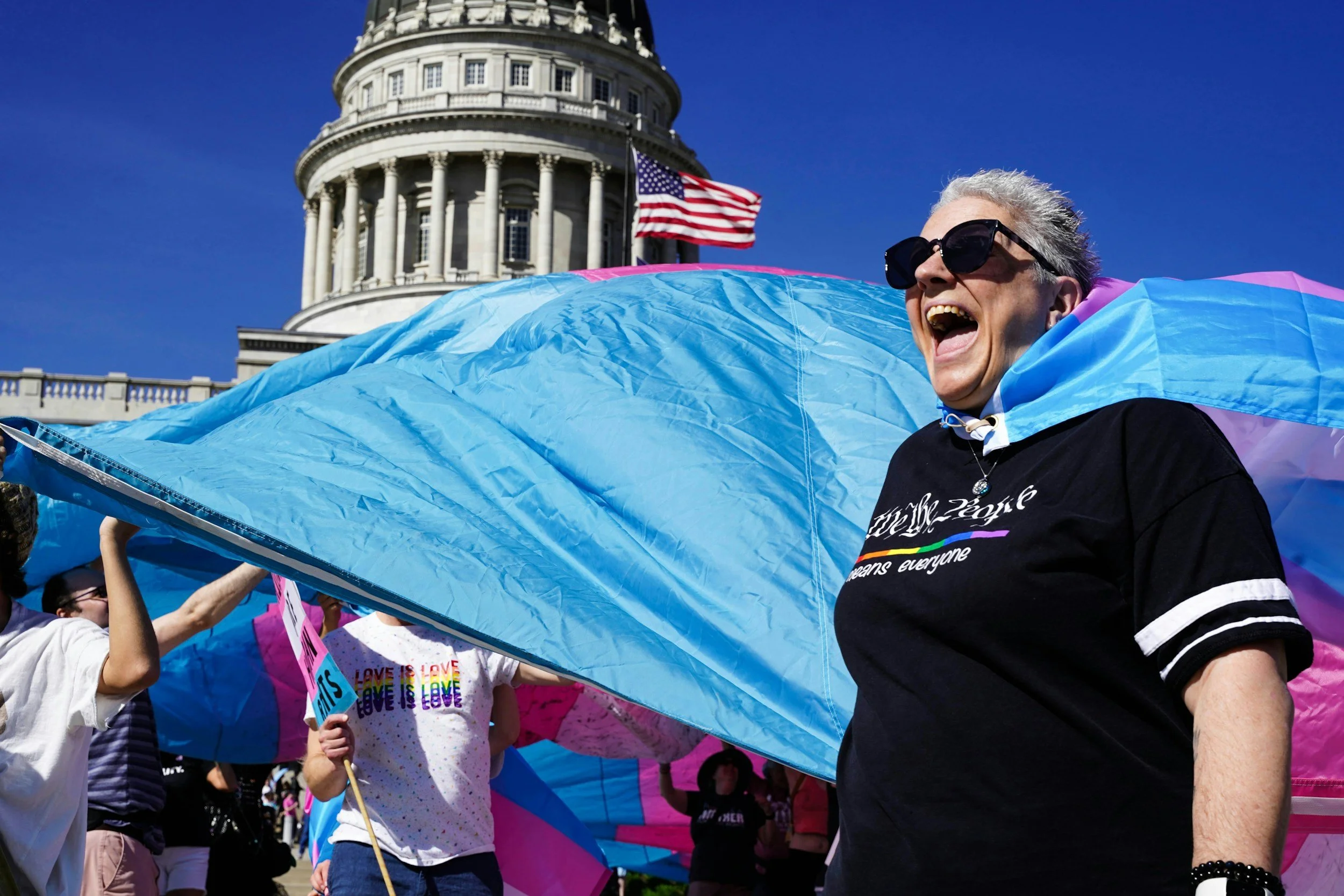
Simultaneously, Trump has aggressively targeted transgender communities, signing multiple executive orders that have removed civil rights protections from trans people and severely restricted transgender youth’s access to gender-affirming care. These orders prompted the Department of Health and Human Services (HHS) to publish a widely criticized review of gender-affirming care, which the government has used as pretext to investigate clinics and justify the withdrawal of federal funding from hospitals providing such care.

Hungary and Poland offer a warning: when governments gain the power to control people’s bodies, they rarely stop there. By relying on anti-gender politics to mobilize his base, Trump has built on his first-term success of reshaping the Supreme Court, using it to further consolidate power in his second term. He has also expanded his control over regulatory agencies to target federal judges and law firms, and weaponized the Department of Justice (DOJ) to target his political and ideological opponents. This is a critical moment for the judiciary and the legal profession to defend democracy and protect bodily autonomy

By attacking reproductive and LGBTQ rights, the Trump administration is following the authoritarian blueprint–using control over people’s bodies as a means to erode democracy. But these countries also show what resistance can achieve. In Poland, judicial activism to defend court independence became a key barrier against democratic backsliding. Judges called for mass protests, engaged in civil disobedience, and helped pave the way for the PiS party’s defeat in the 2023 parliamentary elections. In sum, an estimated one-third of Polish judges took public action despite facing suspensions, salary cuts, and investigations. Likewise, attorneys and judges in the United States must push back. The lesson from Poland is that you don't need everyone to be brave, but you do need the infrastructure that makes bravery possible and the coalitions that ensure brave actors aren't isolated.

Nonprofits, Tribes, and Local Governments Appeal Ruling Allowing EPA to Terminate Environmental Justice Grants

Plaintiffs ask D.C. Circuit to restore congressionally mandated funds; without relief, 350+ pollution-reduction and climate-resilience projects remain frozen

WASHINGTON — A coalition of nonprofits, Tribes, and local governments today filed an appeal in the U.S. Court of Appeals for the D.C. Circuit, challenging the lower court ruling that suggests the District Court does not have jurisdiction to hear claims related to EPA’s termination of the Congressionally-mandated Environment and Climate Justice (ECJ) Block Grant program, which Congress mandated to fund local projects addressing pollution, flooding, and climate resilience.

The plaintiffs—represented by Earthjustice, the Southern Environmental Law Center (SELC), the Public Rights Project, and Lawyers for Good Government (L4GG)—seek to restore $3 billion in Congressionally authorized funding that has been unlawfully terminated for more than 350+ grantees.

VIEW THE FILING HERE 

Across the country, hundreds of local projects remain stalled, including critical infrastructure work in the Native Village of Kipnuk, Alaska, where recent catastrophic flooding washed away homes and infrastructure that were set to be protected under an EPA-funded riverbank stabilization project. Kipnuk is now facing another winter without housing or protection, and has had to start a Go Fund Me page to pay for emergency services. And, they are far from alone. With hurricane season underway, communities in every region—in particular, the Southeast—remain more vulnerable to storms, flooding, and pollution because this funding was taken away.

“We’re already seeing the human toll of EPA’s unlawful decision in these flood-ravaged Alaskan villages, which could have had $20M available for emergency riverbank stabilization work if the EPA hadn’t terminated the Kipnuk grant in May of this year. This is the result of an Administration prioritizing tax breaks for billionaires at the cost of human lives and critical infrastructure,” said Jillian Blanchard, Vice President of Climate Change & Environmental Justice at Lawyers for Good Government.
“Inevitably, we will see more tragedies in coastal towns as hurricane season approaches that could have been mitigated.  Resilience hubs in Louisiana will not be built, and as more natural disasters strike due to the heartless rescission of these grants, we’re likely to see more and more avoidable tragedies. The Administration’s choice to strip away these lifelines endangers lives, undermines the law, and abandons the very communities Congress promised to protect. If you consider these terminations with the significant reduction in disaster-relief FEMA funding, we’re staring down the barrel of a climate catastrophe waiting to happen. We’re appealing because the stakes couldn’t be higher.”

If successful, the appeal would reinstate the ECJ grants, allowing more than 350 communities and Tribal governments to resume critical projects—ranging from flood prevention to community resilience  hubs—before more preventable destruction occurs.

# # #

Lawyers for Good Government (L4GG) is a nonprofit organization that harnesses the power of 125,000 lawyers, law students, and advocates in the fight for justice. We identify where lawyers can make the greatest impact and mobilize them to defend democracy and the rule of law, protect civil and human rights, and advance environmental justice through coordinated legal action and advocacy efforts that create meaningful change for all Americans.