Written by: Allison Chapman, Civil Rights & Health Equity Project Fellow
–––
At Lawyers for Good Government, we aim to help this country do better by all of its residents – and part of doing that is exposing the ways we are falling short for its most vulnerable groups. From our inception, we have focused our attention on the people that our country’s policies and protections leave out, from immigrants to students of color to abortion-seekers. As our Civil Rights and Health Equity Project Fellow Allison Chapman explains below, transgender, nonbinary, and intersex Americans are the latest group of people to be excised from our nation’s framework of protections. Freedom of movement is a foundational human right, protected under Article 13 of the Universal Declaration of Human Rights. As we close out this year’s International Human Rights Day, please be sure to read Allison’s urgent piece on how that right is being curtailed for transgender, nonbinary, and intersex people and share our fact sheet on the current status of rapidly-changing federal policy surrounding our necessary travel documents.
– Khadijah M. Silver, Supervising Attorney, Civil Rights
–––
Transgender, nonbinary, and intersex people are the latest in a long list of marginalized people who have had harm inflicted upon them by the federal government. Throughout history, the United States government has “Othered” people it has deemed as abnormal and deviant in contrast to the normative as a way to assert power and control. In their book, The Coercive Power of the Law: Vulnerable Bodies and Boundaries of Perception, authors Riley Clare Valantine & L4GG Civil Rights & Health Equity Legal Fellow Zane McNeill describe normative bodies as “white, cisgender, heterosexual, masculine, and able-bodied among other significant identities.” While the courts have generally recognized that they have a duty to balance the equities to protect vulnerable people groups, as Justice Jackson states in her dissent in Orr v. Trump–the Supreme Court has abdicated this duty.
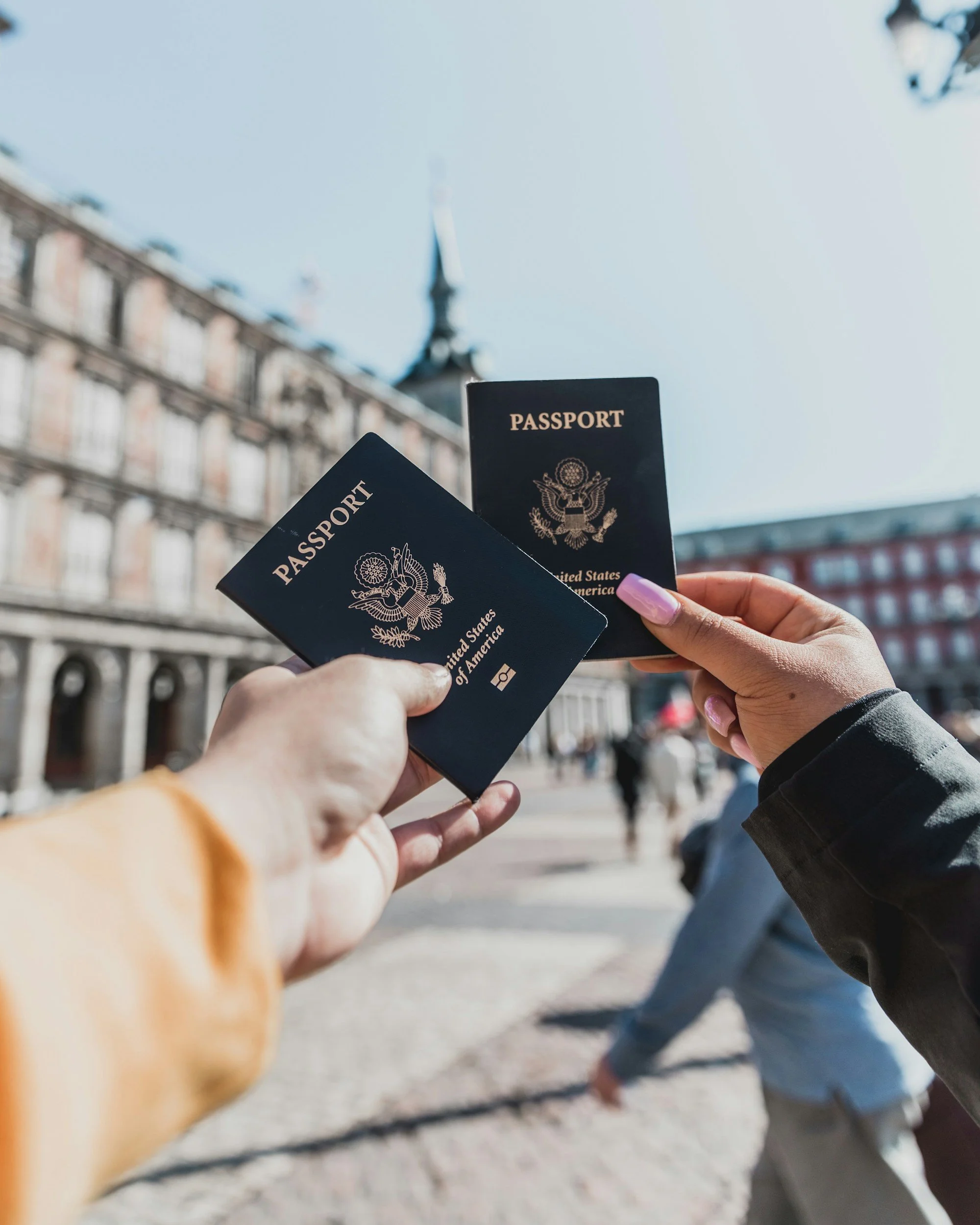
On January 20th, 2025 mere hours after being sworn in as the 47th President, Trump signed an executive order instructing all federal agencies to use a trans-exclusionary definition of “sex” – defining sex as only male or female and unchangeable. Two days later, the U.S. Department of State issued a new policy prohibiting anyone from getting passports with gender markers that did not align with their sex presumed at birth. This led to transgender, nonbinary, and intersex people being sent passports with incorrect gender markers, the government outright denying passport applications, and in some cases, holding applications and supporting documents preventing folks from traveling.
The American Civil Liberties Union (ACLU) filed suit challenging this policy on February 2nd, 2025. This led to the district court to block the implementation of this policy for the plaintiffs by issuing a preliminary injunction (PI) on April 18th, 2025. This was later expanded to apply to all people affected by this policy by the District Court through a class certification on June 17th, 2025. This allowed transgender, nonbinary, and intersex people to once again obtain accurate passports. With the class certification and preliminary injunction in place, people rushed to apply for passports knowing their window of opportunity could be limited due to an appeal by the government.
On September 4th, 2025, the first circuit court of appeals upheld the preliminary injunction, finding that the lower court properly found that the plaintiffs would be irreparably harmed by the policy if it were to take effect, and that the government failed to sufficiently demonstrate that the balance of harms and equities weighed in its favor.
This decision was also appealed to the Supreme Court through the emergency “shadow” docket–which is intended for urgent procedural issues and has been increasingly abused by this administration as a get out of jail free card. On November 6th, 2025, to the dismay of transgender, nonbinary, and intersex people the Supreme Court issued a stay on the preliminary injunction–reversing the lower courts block on implementation of the policy on the preliminary injunction.
This ruling immediately caused panic, fear, and confusion to spread across the entire transgender community due to a sworn statement made in a declaration in the District Court case. In this declaration, Ryan Dooley, the Acting Deputy Assistant Secretary of Passport Services of the U.S. Department of State stated that “[i]n developing new administrative processes for compliance with the Court Order, the Department preserved the ability to track passport applications by members of the PI Class for later replacement should the Court Order be vacated by a higher court.” This left many in the transgender, nonbinary, and intersex communities concerned that the government could revoke the passports they obtained under the preliminary injunction–between June 17th and November 6th.
While the ACLU has recently asked the government to clarify their intentions now that the Supreme Court has ruled, at time of writing the government has not responded. To add to the confusion, the U.S. Department of State changed their Frequently Asked Questions multiple times waffling back and forth with language suggesting that they could seek to revoke any passport with a X gender marker. This leaves transgender passport holders in limbo with worries their passports could be invalidated while they are traveling over the upcoming holidays.
This also violates our obligations under international human rights law and United States court precedent. The freedom of movement of American citizens within and outside the U.S. is traditional and supported by Supreme Court decisions. In Kent v. Dulles, the Court said:
[t]he right to travel is a part of the 'liberty' of which the citizen cannot be deprived without due process of law under the Fifth Amendment. . . . Freedom of movement across frontiers in either direction, and inside frontiers as well, was a part of our heritage. Travel abroad, like travel within the country, may be necessary for a livelihood. It may be as close to the heart of the individual as the choice of what he eats, or wears, or reads. Freedom of movement is basic in our scheme of values.”
Referencing this decision, in United States v. Laub, the court underscored its commitment to the principle, saying “the right to travel is a part of the ‘liberty’ of which the citizen cannot be deprived without due process of law.” The court's repeated commitment to this principle cannot end simply because it’s inconvenient or falls contrary to the president’s political agenda.
This fundamental right is enshrined in internal human rights law due to the significant, irreparable harm caused by the restriction of movement. Valentine & McNeill argue that “once rights-bearing creatures no longer have rights, or have those rights challenged, what is being challenged is our very personhood.” The refusal to issue an accurate passport to a transgender, nonbinary, or intersex person not only erodes the fundamental right to movement enjoyed by all passport holders–but is an attack that is embodied and carried by all whose rights have been contested.
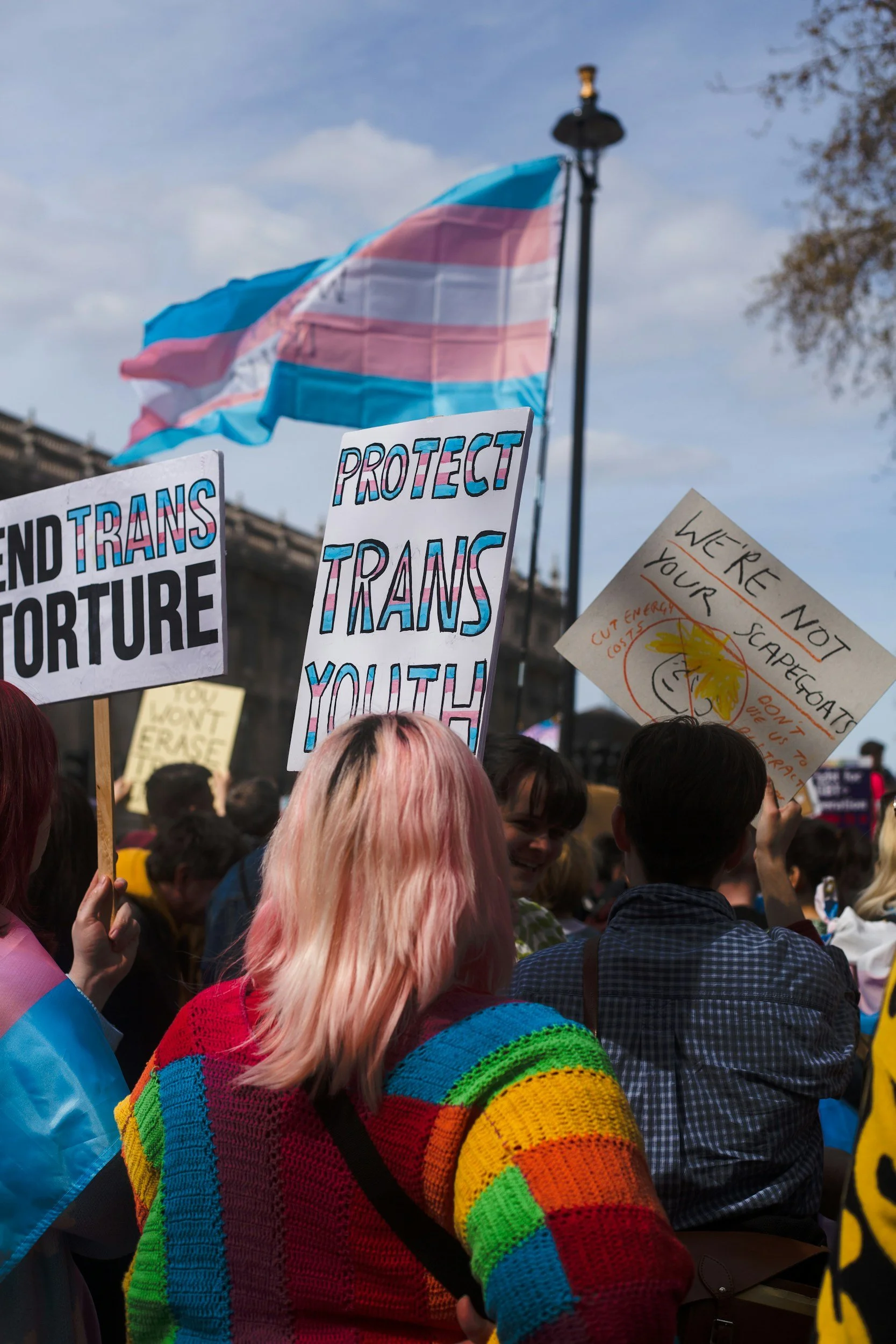
This trauma is especially apparent in the transgender and nonbinary community–as they have become more visible so have the attacks on their rights. “For the entirety of the trans community, it really has become a matter of survival, and that survival has been incredibly difficult,” Alejendra Caraballo, a transgender activist and civil rights attorney, said in an interview with PBS New Hour. After years of attacks on their personhood and the difficulty to simply survive, transgender people are beginning to flee the United States. While the number leaving the United States is unknown, within the United States an estimated 130,000 to 260,000 transgender people have already relocated due to anti-transgender legislation within their state.
Despite our government’s rejection of personhood, it is critical that transgender, nonbinary, and intersex people obtain access to identity documents that allow them to travel regardless–as fleeing may become a necessity for many. Please read and share our fact sheet with those affected or those who represent those who are affected by this ruling. At Lawyers for Good Government, we have created a fact sheet to provide clarity regarding this complicated issue. We encourage you to share this fact sheet with your colleagues and friends. We additionally provide the Policy Resource Hub for Transgender Rights with information regarding the current laws affecting transgender and nonbinary rights in all 56 states and territories, with updates daily. Additionally, lawyers can volunteer with us to help defend the rights of transgender, nonbinary, and intersex people along with defending the rule of law.